Théâtre des Champs-Elysées à Paris 8e Arrondissement
Chargement de la carte...
Précision de la localisation : 9 - Excellente >> Votre avis :

Crédit photo : Pline - Sous licence Creative Commons
 Monument Historique
Adresse renseignée dans la base Mérimée :
13, 15 avenue Montaigne
75008 Paris 8e Arrondissement - France
Code Insee de la commune : 75108
Paris [75] - Paris - Ile de France (Ile-de-France)
Adresse approximative issue des coordonnées GPS (latitude et longitude) :
13 Avenue Montaigne 75008 Paris
Eléments protégés :
La façade sur l'avenue Montaigne avec le retour à droite ; le hall d'entrée ; le foyer ; la salle de spectacle du grand théâtre ; la Comédie des Champs-Elysées : classement par arrêté du 11 décembre 1957
Historique :
Théâtre comportant trois salles, construit à l'initiative de Gabriel Astruc, directeur de la Société Musicale, créée en 1904. Cherchant à doter Paris d'un "palais philharmonique", sa société immobilière achète le terrain en 1910. Les premiers projets des architectes Henri Fivaz et Roger Bouvard sont abandonnés, l'architecte belge, Henry Van de Velde, étant sollicité par le principal financier de l'affaire, Gabriel Thomas. Les frères Auguste et Gustave Perret, sollicités comme entrepreneurs en 1911, proposent un contre-projet architectural fondé sur les possibilités constructives d'une poutraison orthogonale en béton armé : le théâtre actuel, inauguré en 1913, est le fruit de ce projet. Le peintre Maurice Denis et le sculpteur Emile-Antoine Bourdelle sont chargés du programme décoratif. Les peintres Jacqueline Marval, Henri Lebasque, Edouard Vuillard et Ker-Xavier Roussel participent également à la décoration des différentes salles. Le théâtre a été restauré de 1986 à 1987 ; en 1990, l'architecte Brigitte de Kosmi a construit sur la terrasse du théâtre un restaurant et un salon de thé, construction controversée eu égard au statut de Monument historique de l'édifice.
Périodes de construction :
1er quart XXe siècle
Architecte ou maître d'oeuvre :
Perret Gustave (architecte), Perret Auguste (architecte), Denis Maurice (peintre), Bourdelle Emile-Antoine (sculpteur), Denis Maurice (peintre), Marval Jacqueline (peintre), Lebasque Henri (peintre), Vuillard Edouard (peintre), Roussel Ker-Xavier (peintre)
Propriété privée
Informations pratiques de visite ou services :
Ouvert ou fermé à la visite, location de salle, chambres d'hôtes ?
Autres photographies :
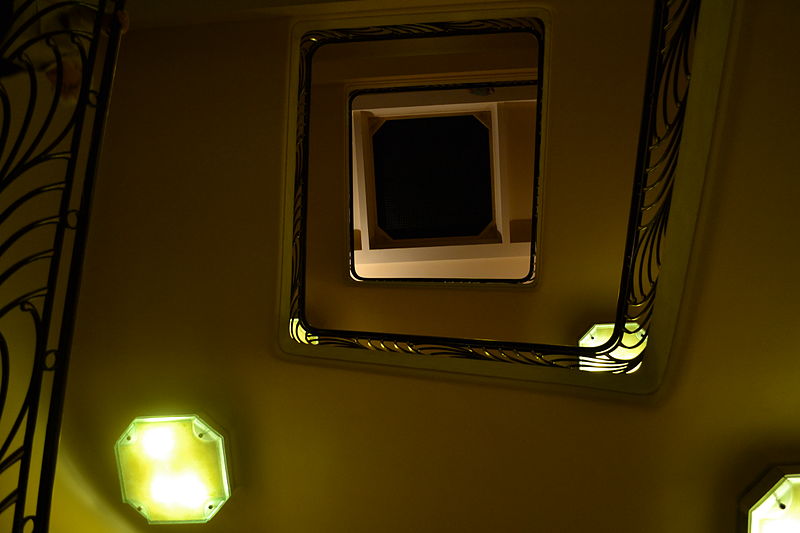
Théâtre des Champs-Elysées à Paris 8e Arrondissement
English: Théâtre des Champs-Élysées, Paris

Théâtre des Champs-Elysées à Paris 8e Arrondissement
Théâtre des Champs-Élysées

Théâtre des Champs-Elysées à Paris 8e Arrondissement
Français : intérieur du théâtre.

Théâtre des Champs-Elysées à Paris 8e Arrondissement
Français : intérieur du théâtre.
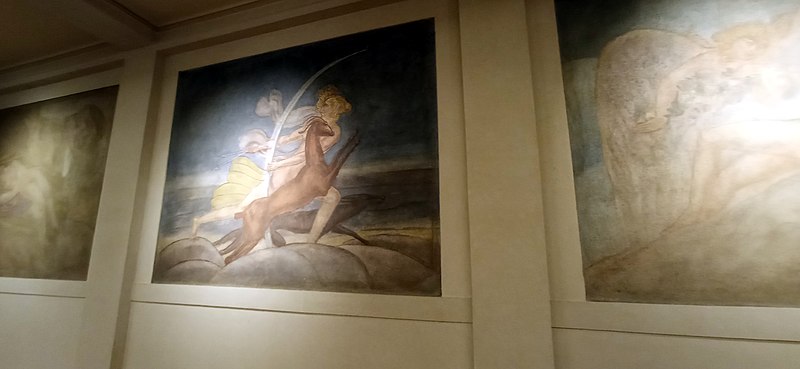
Théâtre des Champs-Elysées à Paris 8e Arrondissement
Français : intérieur du théâtre.

Théâtre des Champs-Elysées à Paris 8e Arrondissement
Français : intérieur du théâtre.

Théâtre des Champs-Elysées à Paris 8e Arrondissement
Français : intérieur du théâtre.

Théâtre des Champs-Elysées à Paris 8e Arrondissement
Français : Gisele au theatre des champs élysées.

Théâtre des Champs-Elysées à Paris 8e Arrondissement
A theatre in Paris It is the Théâtre des Champs-Élysées. One Avenue Montaigne. The Théâtre des Champs-Élysées is a Parisian theatre, famous for being the place of the scandal related to the first performance of Igor Stravinsky's The Rite of Spring in 1913. In spite of its name, it is not located on Champs-Élysées, but at 15, avenue Montaigne, still in the VIIIe arrondissement of Paris, France. Completed in 1913, the venue is one of the few major examples of Art Deco in Paris. It is the work of architect Auguste Perret, with an exterior bas relief by Antoine Bourdelle, a dome by Maurice Denis, paintings by Édouard Vuillard and a stage curtain by Xavier Roussel. The theatre was founded by journalist and impresario Gabriel Astruc with a view to providing a venue suitable for contemporary music-making, dance and opera, unlike traditional, more conservative institutions such as the Paris Opera. Accordingly, it housed the Ballets Russes for its first season and consequently the world première of what many deem to be the most influential ballet and musical work of the twentieth century: the Rite of Spring. Although the theatre is a private venture, it is sponsored by the Caisse des Dépôts et Consignations, which has owned the building since 1970. Nowadays, the theatre shows about three staged opera productions a year, mostly baroque or small-orchestra pieces, in accordance with the moderate size of its stage and orchestra pit. In addition, it houses an important concert season. It is home to two orchestras: the Orchestre National de France and Orchestre Lamoureux, as well as the French base of the Vienna Philharmonic Orchestra. The Orchestre Philharmonique de Radio France and Ensemble orchestral de Paris play most of their concerts there too. Some dance, chamber music, recital and pop events also take place at the Théâtre des Champs-Élysées. The same building also houses the smaller Comédie des Champs-Élysées theatre on the 3rd floor and the Studio des Champs-Élysées on the 5th floor. Yasmina Reza's 'Art' premiered on the Comédie stage in 1994, winning two Molières. Prices can be very expensive for the main stage, and vary widely even for a particular event, from €5 for restricted visibility to €150 for the best seats (April 2006). Avenue Montaigne is one of the most exclusive streets in Paris; it is twinned with Madison Avenue in New York. The theater, both the outside and the inside has been featured in the 1973 French espionage movie Le Silencieux, in a role somewhat similar to the one played by the Royal Albert Hall in Hitchcock's The Man Who Knew Too Much. Most recently it appears in Jan Kounen's "Igor Stravinsky and Coco Chanel" (released in the U.S in the summer of 2010), starring Mads Mikkelsen and Anna Mougalis in the title roles). The film begins with a brief outside shot followed by an extensive recreation of the original staging of the "Rite of Spring" and the turbulence in the audience. On the left is Masion Blanche (a restaurant) and Drouot Montaigne (Ventes Publiques). Near a fashion shop called Valentino. This shot was used in a book, although I've not seen it yet.

Théâtre des Champs-Elysées à Paris 8e Arrondissement
A theatre in Paris It is the Théâtre des Champs-Élysées. One Avenue Montaigne. The Théâtre des Champs-Élysées is a Parisian theatre, famous for being the place of the scandal related to the first performance of Igor Stravinsky's The Rite of Spring in 1913. In spite of its name, it is not located on Champs-Élysées, but at 15, avenue Montaigne, still in the VIIIe arrondissement of Paris, France. Completed in 1913, the venue is one of the few major examples of Art Deco in Paris. It is the work of architect Auguste Perret, with an exterior bas relief by Antoine Bourdelle, a dome by Maurice Denis, paintings by Édouard Vuillard and a stage curtain by Xavier Roussel. The theatre was founded by journalist and impresario Gabriel Astruc with a view to providing a venue suitable for contemporary music-making, dance and opera, unlike traditional, more conservative institutions such as the Paris Opera. Accordingly, it housed the Ballets Russes for its first season and consequently the world première of what many deem to be the most influential ballet and musical work of the twentieth century: the Rite of Spring. Although the theatre is a private venture, it is sponsored by the Caisse des Dépôts et Consignations, which has owned the building since 1970. Nowadays, the theatre shows about three staged opera productions a year, mostly baroque or small-orchestra pieces, in accordance with the moderate size of its stage and orchestra pit. In addition, it houses an important concert season. It is home to two orchestras: the Orchestre National de France and Orchestre Lamoureux, as well as the French base of the Vienna Philharmonic Orchestra. The Orchestre Philharmonique de Radio France and Ensemble orchestral de Paris play most of their concerts there too. Some dance, chamber music, recital and pop events also take place at the Théâtre des Champs-Élysées. The same building also houses the smaller Comédie des Champs-Élysées theatre on the 3rd floor and the Studio des Champs-Élysées on the 5th floor. Yasmina Reza's 'Art' premiered on the Comédie stage in 1994, winning two Molières. Prices can be very expensive for the main stage, and vary widely even for a particular event, from €5 for restricted visibility to €150 for the best seats (April 2006). Avenue Montaigne is one of the most exclusive streets in Paris; it is twinned with Madison Avenue in New York. The theater, both the outside and the inside has been featured in the 1973 French espionage movie Le Silencieux, in a role somewhat similar to the one played by the Royal Albert Hall in Hitchcock's The Man Who Knew Too Much. Most recently it appears in Jan Kounen's "Igor Stravinsky and Coco Chanel" (released in the U.S in the summer of 2010), starring Mads Mikkelsen and Anna Mougalis in the title roles). The film begins with a brief outside shot followed by an extensive recreation of the original staging of the "Rite of Spring" and the turbulence in the audience. On the left is Masion Blanche (a restaurant) and Drouot Montaigne (Ventes Publiques).
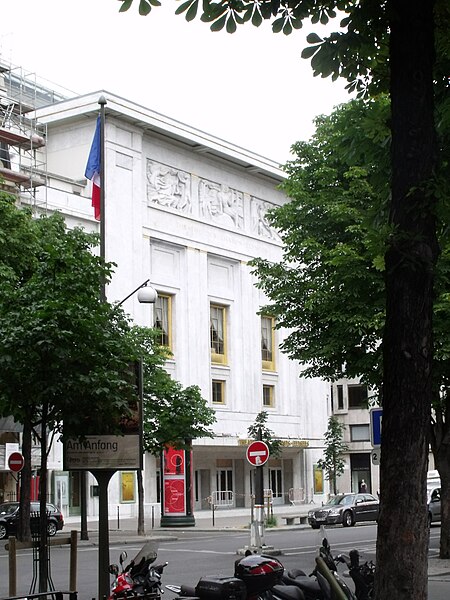
Théâtre des Champs-Elysées à Paris 8e Arrondissement
A theatre in Paris It is the Théâtre des Champs-Élysées. One Avenue Montaigne. The Théâtre des Champs-Élysées is a Parisian theatre, famous for being the place of the scandal related to the first performance of Igor Stravinsky's The Rite of Spring in 1913. In spite of its name, it is not located on Champs-Élysées, but at 15, avenue Montaigne, still in the VIIIe arrondissement of Paris, France. Completed in 1913, the venue is one of the few major examples of Art Deco in Paris. It is the work of architect Auguste Perret, with an exterior bas relief by Antoine Bourdelle, a dome by Maurice Denis, paintings by Édouard Vuillard and a stage curtain by Xavier Roussel. The theatre was founded by journalist and impresario Gabriel Astruc with a view to providing a venue suitable for contemporary music-making, dance and opera, unlike traditional, more conservative institutions such as the Paris Opera. Accordingly, it housed the Ballets Russes for its first season and consequently the world première of what many deem to be the most influential ballet and musical work of the twentieth century: the Rite of Spring. Although the theatre is a private venture, it is sponsored by the Caisse des Dépôts et Consignations, which has owned the building since 1970. Nowadays, the theatre shows about three staged opera productions a year, mostly baroque or small-orchestra pieces, in accordance with the moderate size of its stage and orchestra pit. In addition, it houses an important concert season. It is home to two orchestras: the Orchestre National de France and Orchestre Lamoureux, as well as the French base of the Vienna Philharmonic Orchestra. The Orchestre Philharmonique de Radio France and Ensemble orchestral de Paris play most of their concerts there too. Some dance, chamber music, recital and pop events also take place at the Théâtre des Champs-Élysées. The same building also houses the smaller Comédie des Champs-Élysées theatre on the 3rd floor and the Studio des Champs-Élysées on the 5th floor. Yasmina Reza's 'Art' premiered on the Comédie stage in 1994, winning two Molières. Prices can be very expensive for the main stage, and vary widely even for a particular event, from €5 for restricted visibility to €150 for the best seats (April 2006). Avenue Montaigne is one of the most exclusive streets in Paris; it is twinned with Madison Avenue in New York. The theater, both the outside and the inside has been featured in the 1973 French espionage movie Le Silencieux, in a role somewhat similar to the one played by the Royal Albert Hall in Hitchcock's The Man Who Knew Too Much. Most recently it appears in Jan Kounen's "Igor Stravinsky and Coco Chanel" (released in the U.S in the summer of 2010), starring Mads Mikkelsen and Anna Mougalis in the title roles). The film begins with a brief outside shot followed by an extensive recreation of the original staging of the "Rite of Spring" and the turbulence in the audience. On the left is Masion Blanche (a restaurant) and Drouot Montaigne (Ventes Publiques).

Théâtre des Champs-Elysées à Paris 8e Arrondissement
A theatre in Paris It is the Théâtre des Champs-Élysées. One Avenue Montaigne. The Théâtre des Champs-Élysées is a Parisian theatre, famous for being the place of the scandal related to the first performance of Igor Stravinsky's The Rite of Spring in 1913. In spite of its name, it is not located on Champs-Élysées, but at 15, avenue Montaigne, still in the VIIIe arrondissement of Paris, France. Completed in 1913, the venue is one of the few major examples of Art Deco in Paris. It is the work of architect Auguste Perret, with an exterior bas relief by Antoine Bourdelle, a dome by Maurice Denis, paintings by Édouard Vuillard and a stage curtain by Xavier Roussel. The theatre was founded by journalist and impresario Gabriel Astruc with a view to providing a venue suitable for contemporary music-making, dance and opera, unlike traditional, more conservative institutions such as the Paris Opera. Accordingly, it housed the Ballets Russes for its first season and consequently the world première of what many deem to be the most influential ballet and musical work of the twentieth century: the Rite of Spring. Although the theatre is a private venture, it is sponsored by the Caisse des Dépôts et Consignations, which has owned the building since 1970. Nowadays, the theatre shows about three staged opera productions a year, mostly baroque or small-orchestra pieces, in accordance with the moderate size of its stage and orchestra pit. In addition, it houses an important concert season. It is home to two orchestras: the Orchestre National de France and Orchestre Lamoureux, as well as the French base of the Vienna Philharmonic Orchestra. The Orchestre Philharmonique de Radio France and Ensemble orchestral de Paris play most of their concerts there too. Some dance, chamber music, recital and pop events also take place at the Théâtre des Champs-Élysées. The same building also houses the smaller Comédie des Champs-Élysées theatre on the 3rd floor and the Studio des Champs-Élysées on the 5th floor. Yasmina Reza's 'Art' premiered on the Comédie stage in 1994, winning two Molières. Prices can be very expensive for the main stage, and vary widely even for a particular event, from €5 for restricted visibility to €150 for the best seats (April 2006). Avenue Montaigne is one of the most exclusive streets in Paris; it is twinned with Madison Avenue in New York. The theater, both the outside and the inside has been featured in the 1973 French espionage movie Le Silencieux, in a role somewhat similar to the one played by the Royal Albert Hall in Hitchcock's The Man Who Knew Too Much. Most recently it appears in Jan Kounen's "Igor Stravinsky and Coco Chanel" (released in the U.S in the summer of 2010), starring Mads Mikkelsen and Anna Mougalis in the title roles). The film begins with a brief outside shot followed by an extensive recreation of the original staging of the "Rite of Spring" and the turbulence in the audience. On the left is Masion Blanche (a restaurant) and Drouot Montaigne (Ventes Publiques).

Théâtre des Champs-Elysées à Paris 8e Arrondissement
Français : photo prise au TCE (Théâtre des Champs-Elysées) - LAAC (L'Atelier d'Art Chorégraphique)

Théâtre des Champs-Elysées à Paris 8e Arrondissement

Théâtre des Champs-Elysées à Paris 8e Arrondissement

Théâtre des Champs-Elysées à Paris 8e Arrondissement

Théâtre des Champs-Elysées à Paris 8e Arrondissement

Théâtre des Champs-Elysées à Paris 8e Arrondissement

Théâtre des Champs-Elysées à Paris 8e Arrondissement

Théâtre des Champs-Elysées à Paris 8e Arrondissement

Théâtre des Champs-Elysées à Paris 8e Arrondissement

Théâtre des Champs-Elysées à Paris 8e Arrondissement

Théâtre des Champs-Elysées à Paris 8e Arrondissement

Théâtre des Champs-Elysées à Paris 8e Arrondissement

Théâtre des Champs-Elysées à Paris 8e Arrondissement

Théâtre des Champs-Elysées à Paris 8e Arrondissement

Théâtre des Champs-Elysées à Paris 8e Arrondissement

Théâtre des Champs-Elysées à Paris 8e Arrondissement

Théâtre des Champs-Elysées à Paris 8e Arrondissement

Théâtre des Champs-Elysées à Paris 8e Arrondissement

Théâtre des Champs-Elysées à Paris 8e Arrondissement

Théâtre des Champs-Elysées à Paris 8e Arrondissement

Théâtre des Champs-Elysées à Paris 8e Arrondissement

Théâtre des Champs-Elysées à Paris 8e Arrondissement

Théâtre des Champs-Elysées à Paris 8e Arrondissement

Théâtre des Champs-Elysées à Paris 8e Arrondissement

Théâtre des Champs-Elysées à Paris 8e Arrondissement

Théâtre des Champs-Elysées à Paris 8e Arrondissement

Théâtre des Champs-Elysées à Paris 8e Arrondissement

Théâtre des Champs-Elysées à Paris 8e Arrondissement

Théâtre des Champs-Elysées à Paris 8e Arrondissement

Théâtre des Champs-Elysées à Paris 8e Arrondissement

Théâtre des Champs-Elysées à Paris 8e Arrondissement

Théâtre des Champs-Elysées à Paris 8e Arrondissement

Théâtre des Champs-Elysées à Paris 8e Arrondissement

Théâtre des Champs-Elysées à Paris 8e Arrondissement

Théâtre des Champs-Elysées à Paris 8e Arrondissement

Théâtre des Champs-Elysées à Paris 8e Arrondissement

Théâtre des Champs-Elysées à Paris 8e Arrondissement
Fiche Mérimée : PA00088883
Dernière mise à jour de la fiche Monumentum : 2026-05-25
Consultez le programme des Journées du Patrimoine pour le Monument Historique Théâtre des Champs-Elysées situé à Paris 8e Arrondissement en consultant le programme officiel des JEP 2026.
A proximité :
Paris 8e Arrondissement - Cathédrale américaine de Paris
Paris 8e Arrondissement - Chapelle Notre-Dame-de-Consolation
Paris 8e Arrondissement - Hôtel Plaza-Athénée
Paris 8e Arrondissement - Hôtel Vilgruy
Paris 8e Arrondissement - Hôtel particulier
Paris 8e Arrondissement - Hôtel particulier de René Lalique
Paris 16e Arrondissement - Immeuble, ancien hôtel particulier, actuelle bibliothèque de l'Institut Cervantès
Paris 8e Arrondissement - Restaurant La Fermette Marbeuf
Paris 8e Arrondissement - Restaurant le Relais-Plaza
 Paris 8e Arrondissement - Station Alma-Marceau de la ligne 9 du métropolitain
Cartes postales anciennes à proximité :


