Fort de Château-Queyras à Château-Ville-Vieille
Chargement de la carte...
Précision de la localisation : 8 - Très satisfaisante >> Votre avis :

Crédit photo : Olivier Cochard-Labbé - Sous licence Creative Commons
Street View Modifier la localisation
 Monument Historique
Adresse renseignée dans la base Mérimée :
05350 Château-Ville-Vieille - France
Code Insee de la commune : 05038
Hautes Alpes [05] - Gap - Provence Alpes Côte d'Azur (Provence-Alpes-Côte d'Azur)
Adresse approximative issue des coordonnées GPS (latitude et longitude) :
5055 A Le Fort 05350 Château-Ville-Vieille
Eléments protégés :
Fort de Château-Queyras (remparts et extérieur des bâtiments) , au sommet du verrou barrant la vallée du Guil, à l'entrée de la gorge de la Combe : inscription par arrêté du 29 novembre 1948
Description :
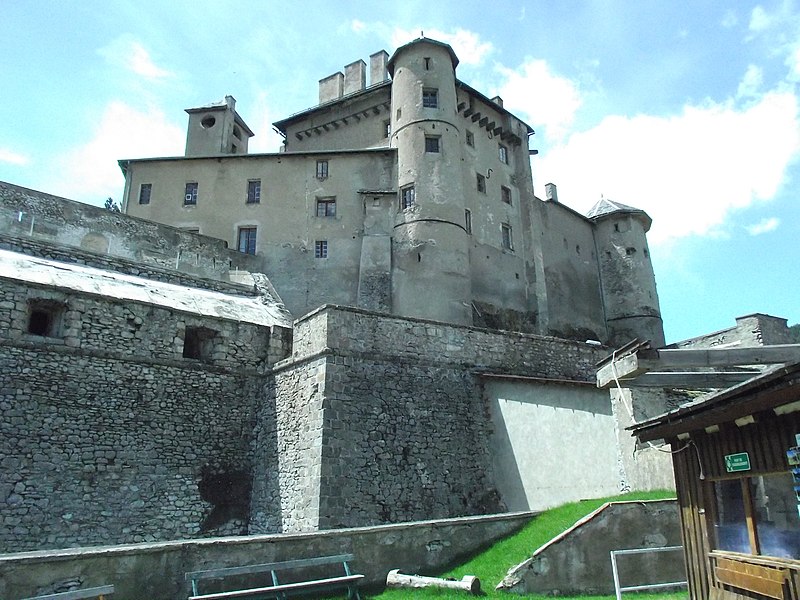
Le fort est constitué d'une enceinte extérieure, constituant l'enceinte de combat, et renfermant divers bâtiments et du château primitif, prolongé, à l'est, par sa basse cour. Enceinte : sur la moitié sud du périmètre, l'enceinte consiste en un simple mur percé de créneaux de fusillade, descendant à l'est en gradins pour épouser la déclivité du rebord du plateau. Le front nord-ouest comporte des flanquements plus réguliers, le front nord est un front bastionné. Les bâtiments contenus dans l'enceinte : infirmerie, caserne, réfectoire, cuisine, mess des sous-officiers, manutention, deux batteries constituées par 4 et 5 casemates à la Haxo dont les couloirs sont voûtés d'arêtes, une tour cylindrique, vestige du château primitif, le magasin à poudre, voûté en berceau. Le château, partie la plus ancienne, a un plan trapézoïdal flanqué d'une tour à chaque angle. Le "donjon" occupe à peu près la moitié de la cour centrale, dans l'angle nord-est de l'enceinte, sans faire saillie à l'extérieur. Ce gros bâtiment à plan légèrement en losange et à quatre étages occupe l'angle nord-est de l'enceinte du château. Il est cantonné de deux tourelles, l'une au nord-est commune à l'enceinte, l'autre au sud-ouest enfermant l'escalier à vis desservant les étages.
Historique :
Un château dont l'entretien est réparti entre les communautés du Queyras est attesté en ce lieu en 1265. En 1587 il est pris par Lesdiguières qui ordonne des travaux qui seront réalisés entre 1614 et 1628. Nouveaux travaux au milieu du XVIIe siècle. En 1692, siège par les troupes du duc de Savoie, la résistance victorieuse du fort contribue à son maintien malgré la construction 30 kilomètres en aval de Montdauphin. De 1693 à 1723, exécution des projets de Vauban : construction de la grande enceinte ou fausse braie englobant l'ensemble du plateau ainsi que d'un certain nombre de bâtiments dont la chapelle sous le vocable de Saint-Louis roi de France. De 1782 à 1790, construction du magasin à poudre et de la boulangerie sur le projet de l'ingénieur Godinot de Vilaire. En 1791, démolition de la partie haute du donjon jugée trop vulnérable. De 1820 à 1830 travaux d'amélioration des conditions de vie. En 1841 construction de 2 batteries de 5 casemates à la Haxo. Vers 1930 construction de casernes sur le plateau ouest.
Propriété de la commune
Informations pratiques de visite ou services :
Ouvert ou fermé à la visite, location de salle, chambres d'hôtes ?
Autres photographies :

Fort de Château-Queyras à Château-Ville-Vieille
Français : Fort Queyras Le donjon

Fort de Château-Queyras à Château-Ville-Vieille
Français : Fort Queyras - Porte dauphine

Fort de Château-Queyras à Château-Ville-Vieille
Français : Fort Queyras - L'ensemble du château

Fort de Château-Queyras à Château-Ville-Vieille
Français : Fort Queyras (Inscrit)

Fort de Château-Queyras à Château-Ville-Vieille
This building is indexed in the base Mérimée, a database of architectural heritage maintained by the French Ministry of Culture, under the reference PA00080549.

Fort de Château-Queyras à Château-Ville-Vieille
Français : Fort Queyras - Le pont-levis donnant accès à la cour supérieure

Fort de Château-Queyras à Château-Ville-Vieille
Français : Fort Queyras - Pont-levis et fossé

Fort de Château-Queyras à Château-Ville-Vieille
Français : Fort Queyras - Porte dauphine

Fort de Château-Queyras à Château-Ville-Vieille
Français : Fort Queyras - Enceinte extérieure

Fort de Château-Queyras à Château-Ville-Vieille
bisogno di protezione

Fort de Château-Queyras à Château-Ville-Vieille
Français : Chateau Queyras France.

Fort de Château-Queyras à Château-Ville-Vieille
Fort Queyras, Hautes-Alpes, Provence-Alpes-Côte d’Azur, France

Fort de Château-Queyras à Château-Ville-Vieille
fort Queyras
Fort de Château-Queyras à Château-Ville-Vieille
Fort Queyras

Fort de Château-Queyras à Château-Ville-Vieille
English: This is Fort Queyras. A stronghold located in the High Alps, and built during the 13th century. Even the famous French architect Vauban has worked on it during the 17th and 18th century, to make it stronger. Nowadays, Fort Queyras is a private property, but open to the public.

Fort de Château-Queyras à Château-Ville-Vieille
Fort Queyras, in het dal van de rivier de Guille in de Franse Haute Alpes.

Fort de Château-Queyras à Château-Ville-Vieille
This file was uploaded with Commonist.

Fort de Château-Queyras à Château-Ville-Vieille
This picture as been uploaded as part of L'Été des régions Wikipédia.

Fort de Château-Queyras à Château-Ville-Vieille
Hautes Alpes Chateau Queyras Chateau
![Fort de Château-Queyras - 500px provided description: OLYMPUS DIGITAL CAMERA [#forest ,#rock ,#france ,#castle ,#mountain ,#alps ,#kotor ,#budva ,#pins ,#alpes ,#perast ,#crete ,#pines ,#montagne ,#monastir ,#monemvasia ,#stari grad ,#rocher ,#hvar ,#rethymnon ,#foret ,#chateau]](https://p.monumentum.fr/galerie/maxi/00459/459721-500px-provided-description-olympus-digital-camera-forest-rock-france-castle-mountain-alps-kotor-budva-pins-alpes-perast-crete-pines-montagne-monastir-monemvasia-stari-grad-rocher-hvar-rethymnon-foret-.jpg)
Fort de Château-Queyras à Château-Ville-Vieille
500px provided description: OLYMPUS DIGITAL CAMERA [#forest ,#rock ,#france ,#castle ,#mountain ,#alps ,#kotor ,#budva ,#pins ,#alpes ,#perast ,#crete ,#pines ,#montagne ,#monastir ,#monemvasia ,#stari grad ,#rocher ,#hvar ,#rethymnon ,#foret ,#chateau]

Fort de Château-Queyras à Château-Ville-Vieille
English: Château Queyras Identifier: castleschateauxo00mans (find matches) Title: Castles and chateaux of old Burgundy and the border provinces Year: 1909 (1900s) Authors: Mansfield, Milburg Francisco, 1871- (from old catalog) Subjects: Castles Publisher: Boston, L. C. Page & company Contributing Library: The Library of Congress Digitizing Sponsor: The Library of Congress View Book Page: Book Viewer About This Book: Catalog Entry View All Images: All Images From Book Click here to view book online to see this illustration in context in a browseable online version of this book. Text Appearing Before Image: he Durance.The fortress was the work of Vauban, and itsbastions are built of a curious pink marblefound in the valley of the Queyras. No doubtbut that the fortress is impregnable, or waswhen built, but it would avail little to-dayagainst modern explosives. Up the valley of the Guil is the region knownas the Val de Queyras, one of the ProtestantValleys of Dauphiny, where the religiouswars under Lesdiguieres, during the reign ofHenri IV, raged fast and furious. ChateauQueyras, as its name indicates, is the seat ofa mediaeval pile which, if not stupendous withrespect to its outlines, is at least more than sat-isfying when viewed from afar. It is an an-cient feudal castle and befits its name, in looksat least, and was once the seat of the seigneursof Chateau-Vieille Ville. Like the fort of MontDauphin it seemingly was built to guard thepassage to the frontier by the Col Lacroix andthe Col de Traversette. Here as early as 1480 Louis II of Dauphinycut a tunnel below the Col to make the road Text Appearing After Image: to to-Si In the Alps of Dauphiny 309 between the French valleys and the rich plainsof the Po the easier of passage. South of Chateau Queyras is Saint Veran,the highest collection of human habitations inFrance, and one of the most elevated in Europe.It is commonly called the highest commune inEurope where the peasants eat white bread.Approximately its elevation is seven thousandfeet, still some thousands below Leadville, onerecalls. Because of its altitude also, it has beencalled the most pious village in France. Thismay or may not be so, but at any rate the placehas ever been on the verge of changing its re-ligion from Protestant to Catholic and fromCatholic to Protestant. What is in the rarefiedatmosphere, one wonders, to induce such fickle-ness in matters spiritual! Embrun, of all the towns of this part of Dau-phiny, is the most illustrious and famous. Thisis perhaps as much from its association withLouis XI as for any other reason, for it is reck-oned one of the dullest towns in Fr Note About Images Please note that these images are extracted from scanned page images that may have been digitally enhanced for readability - coloration and appearance of these illustrations may not perfectly resemble the original work.

Fort de Château-Queyras à Château-Ville-Vieille
Français : surune vue de 1936.

Fort de Château-Queyras à Château-Ville-Vieille

Fort de Château-Queyras à Château-Ville-Vieille
French painter, illustrator, photographer and lithographer

Fort de Château-Queyras à Château-Ville-Vieille
French painter, illustrator, photographer and lithographer

Fort de Château-Queyras à Château-Ville-Vieille

Fort de Château-Queyras à Château-Ville-Vieille

Fort de Château-Queyras à Château-Ville-Vieille

Fort de Château-Queyras à Château-Ville-Vieille

Fort de Château-Queyras à Château-Ville-Vieille

Fort de Château-Queyras à Château-Ville-Vieille

Fort de Château-Queyras à Château-Ville-Vieille

Fort de Château-Queyras à Château-Ville-Vieille

Fort de Château-Queyras à Château-Ville-Vieille
French geographer and climatologist

Fort de Château-Queyras à Château-Ville-Vieille
Français : Sujet : Portes de ville Briançon (Hautes-Alpes, France) Appartient à l’ensemble documentaire : BnGren00 Langue : français

Fort de Château-Queyras à Château-Ville-Vieille
Français : Sujet : Châteaux Cours d'eau Château-Ville-Vieille (Haute-Alpes) Appartient à l’ensemble documentaire : BnGren00 Langue : français

Fort de Château-Queyras à Château-Ville-Vieille
Français : Sujet : Châteaux Château-Ville-Vieille (Haute-Alpes) Appartient à l’ensemble documentaire : BnGren00 Langue : français

Fort de Château-Queyras à Château-Ville-Vieille
Français : Sujet : Châteaux Château-Ville-Vieille (Haute-Alpes) Appartient à l’ensemble documentaire : BnGren00 Langue : français

Fort de Château-Queyras à Château-Ville-Vieille
Français : Sujet : Châteaux Cours d'eau Château-Ville-Vieille (Haute-Alpes) Appartient à l’ensemble documentaire : BnGren00 Langue : français
Fiche Mérimée : PA00080549
Dernière mise à jour de la fiche Monumentum : 2026-10-08
Consultez le programme des Journées du Patrimoine pour le Monument Historique Fort de Château-Queyras situé à Château-Ville-Vieille en consultant le programme officiel des JEP 2026.
A proximité :
Château-Ville-Vieille - Chapelle de pénitents de Prats-Hauts
Molines-en-Queyras - Maison
Château-Ville-Vieille - Maison Thier, sise aux Meyriès
Molines-en-Queyras - Maison, au hameau de la Rua
Château-Ville-Vieille - Maison, sise Clot du Riou à Souliers
Château-Ville-Vieille - Maison, sise à Château-Queyras
Château-Ville-Vieille - Monument aux morts de la guerre de 1914-1918, dit Monument de l'Ange gardien
Château-Ville-Vieille - Église Saint-André
Arvieux - Église Saint-Laurent
Molines-en-Queyras - Église Saint-Romain
Cartes postales anciennes à proximité :