Noviciat des Jésuites à Avignon

Chargement de la carte...

Précision de la localisation : 6 - A priori satisfaisante   >>  Votre avis :   

Monument Historique Noviciat des Jésuites situé à Avignon

Crédit photo : Marianne Casamance - Sous licence Creative Commons

  Street View      Modifier la localisation

Logo Monument HistoriqueMonument Historique

Adresse renseignée dans la base Mérimée :
84000 Avignon - France

Code Insee de la commune : 84007
Vaucluse [84] - Avignon - Provence Alpes Côte d'Azur (Provence-Alpes-Côte d'Azur)

Adresse approximative issue des coordonnées GPS (latitude et longitude) :
20 Rue du Portail Boquier 84000 Avignon

Eléments protégés :
Façades et couvertures des bâtiments entourant le cloître ; cloître et son aire ; entrée et galeries de part et d'autre de cette entrée ; chapelle : inscription par arrêté du 13 décembre 1950

Propriété de la commune

Informations pratiques de visite ou services :

Ouvert ou fermé à la visite, location de salle, chambres d'hôtes ?

Autres photographies :

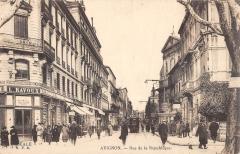
Noviciat des Jésuites - The main shopping road in Avignon heading south of Place de l'Horloge.

Rue de la Republique Rue de la Bonaparte, built from 1856 to 1867, required a major displacement of residents in order to be built. Between Porte de la République and Place de l'Horloge, you will see the old barracks converted into the Hautpoul Civic Center, Agricola Perdiguier Square, the Jesuit church on the former cloister of Saint-Martial, the High School Chapel that became the Lapidary Museum, a bronze fountain by Paul Pamard, the bust of Frederic Mistral and the famous sweet shop, Péchés Gourmands.

On the corner of Rue de la Republique and Rue Frederic Mistral is the former Chapelle du college des Jesuites, now the Musee Lapidaire.

Lapidaire

The chapel of the Jesuit College was designed originally to present the medieval sculptures and Gallo-Roman the Musée Calvet . For ten years, these spaces are open to other museum collections of ancient Egyptian, Greek and Etruscan. These developments herald the faces of future archaeological rooms at the Musée Calvet.

This beautiful testimony of Baroque architecture , located in the heart of Avignon, is not the work of one architect as evidenced by recent research by the historian Alain Breton. Martellange Etienne (1568 or 1569-1641) designed Plans of the church and began construction in 1620 . Eight years later, the architect Avignon Francis Royers of Valfenière said the yard and took him to run.

The building has a plan of great simplicity , consisting of a nave , preceded by a narthex and leading the choir consists of a short-span and a pentagonal apse, flanked by two vestries. In these latter is the ground floor of the towers used respectively tower and shelter for a clock. The nave is flanked on either side of five bays pierced by arcades and dominated by stands with balusters. Above the galleries are superimposed a frieze decorated with plants, a cornice and the attic.

Large windows, now bricked up one side and once fitted with stained glass, whose implementation was entrusted to the glass Nîmes F. Commeaux , surmounted the whole. At the entrance of the nave took place two rounds of stairs accessing the side galleries and the large central gallery with balustrade, built in 1660 only. Architectural decoration, due mainly to the sculptor Avignon, Reynau Barbeau , relies heavily on the rich repertoire of plastic plants: palms, acanthus leaves, garlands, rosettes.

The exuberance of carefully controlled setting, the harmonious distribution in the upper part of the building, exalt the supreme elegance of the ridge overlooking the vaulted nave, while in the choir, play strong lines of the barrel vault terminated by a cul de four pentagonal, forms as an irresistible call to infinity.

All strikes again by his majesty, although the building has undergone many changes and damage as evidenced by the current configuration of the choir. Indeed, in the late seventeenth century a monumental altar of plaster occupied the entire space. This portico of gigantic proportions, which did no less than ten columns, sixteen pilasters, an attic, and made ​​the circuit of the apse, was created by John Péru, architect and sculptor Avignon. The same Péru elaborated the glory of plaster taking place at the base of the apsidal arch. It is also during this time that the niche once provided with a bay window and fitted on the back wall of the apse, was performed.

In the first half of the nineteenth century the transformation of the college hall and chapel in kitchens, laundry and dining room led to the ruin of the choir, the total disappearance of the altarpiece and the partial destruction of the glory of Péru. When in 1851 the church was again assigned to worship, important work intervened within the choir: installation of an altar, a communion of support, restore the glory of Peru .

At the same time, the oak paneling concealing dark base of the pilasters partly covering the walls, breaking somewhat the strength of the original order. Similarly, the beautiful altar of gilded wood adorned the grand stand at the entrance to the nave, made ​​no part of the original decor but comes from the chapel of a commune in the Vaucluse (Thor). In the first two decades of the twentieth century, the chapel underwent many vicissitudes and served, for example, an exhibition of an airplane, fair beekeeping. The decision to locate within its walls a lapidary museum break came very opportunely with solutions sometimes extravagant and ill-suited to the nobility of the building .  Close ups of the frontage of the museum / former chapel on Rue de la Republique.
Noviciat des Jésuites à Avignon

The main shopping road in Avignon heading south of Place de l'Horloge. Rue de la Republique Rue de la Bonaparte, built from 1856 to 1867, required a major displacement of residents in order to be built. Between Porte de la République and Place de l'Horloge, you will see the old barracks converted into the Hautpoul Civic Center, Agricola Perdiguier Square, the Jesuit church on the former cloister of Saint-Martial, the High School Chapel that became the Lapidary Museum, a bronze fountain by Paul Pamard, the bust of Frederic Mistral and the famous sweet shop, Péchés Gourmands. On the corner of Rue de la Republique and Rue Frederic Mistral is the former Chapelle du college des Jesuites, now the Musee Lapidaire. Lapidaire The chapel of the Jesuit College was designed originally to present the medieval sculptures and Gallo-Roman the Musée Calvet . For ten years, these spaces are open to other museum collections of ancient Egyptian, Greek and Etruscan. These developments herald the faces of future archaeological rooms at the Musée Calvet. This beautiful testimony of Baroque architecture , located in the heart of Avignon, is not the work of one architect as evidenced by recent research by the historian Alain Breton. Martellange Etienne (1568 or 1569-1641) designed Plans of the church and began construction in 1620 . Eight years later, the architect Avignon Francis Royers of Valfenière said the yard and took him to run. The building has a plan of great simplicity , consisting of a nave , preceded by a narthex and leading the choir consists of a short-span and a pentagonal apse, flanked by two vestries. In these latter is the ground floor of the towers used respectively tower and shelter for a clock. The nave is flanked on either side of five bays pierced by arcades and dominated by stands with balusters. Above the galleries are superimposed a frieze decorated with plants, a cornice and the attic. Large windows, now bricked up one side and once fitted with stained glass, whose implementation was entrusted to the glass Nîmes F. Commeaux , surmounted the whole. At the entrance of the nave took place two rounds of stairs accessing the side galleries and the large central gallery with balustrade, built in 1660 only. Architectural decoration, due mainly to the sculptor Avignon, Reynau Barbeau , relies heavily on the rich repertoire of plastic plants: palms, acanthus leaves, garlands, rosettes. The exuberance of carefully controlled setting, the harmonious distribution in the upper part of the building, exalt the supreme elegance of the ridge overlooking the vaulted nave, while in the choir, play strong lines of the barrel vault terminated by a cul de four pentagonal, forms as an irresistible call to infinity. All strikes again by his majesty, although the building has undergone many changes and damage as evidenced by the current configuration of the choir. Indeed, in the late seventeenth century a monumental altar of plaster occupied the entire space. This portico of gigantic proportions, which did no less than ten columns, sixteen pilasters, an attic, and made ​​the circuit of the apse, was created by John Péru, architect and sculptor Avignon. The same Péru elaborated the glory of plaster taking place at the base of the apsidal arch. It is also during this time that the niche once provided with a bay window and fitted on the back wall of the apse, was performed. In the first half of the nineteenth century the transformation of the college hall and chapel in kitchens, laundry and dining room led to the ruin of the choir, the total disappearance of the altarpiece and the partial destruction of the glory of Péru. When in 1851 the church was again assigned to worship, important work intervened within the choir: installation of an altar, a communion of support, restore the glory of Peru . At the same time, the oak paneling concealing dark base of the pilasters partly covering the walls, breaking somewhat the strength of the original order. Similarly, the beautiful altar of gilded wood adorned the grand stand at the entrance to the nave, made ​​no part of the original decor but comes from the chapel of a commune in the Vaucluse (Thor). In the first two decades of the twentieth century, the chapel underwent many vicissitudes and served, for example, an exhibition of an airplane, fair beekeeping. The decision to locate within its walls a lapidary museum break came very opportunely with solutions sometimes extravagant and ill-suited to the nobility of the building . Close ups of the frontage of the museum / former chapel on Rue de la Republique.


Crédit : Elliott Brown from Birmingham, United Kingdom
2011-05-25
Noviciat des Jésuites - The main shopping road in Avignon heading south of Place de l'Horloge.

Rue de la Republique Rue de la Bonaparte, built from 1856 to 1867, required a major displacement of residents in order to be built. Between Porte de la République and Place de l'Horloge, you will see the old barracks converted into the Hautpoul Civic Center, Agricola Perdiguier Square, the Jesuit church on the former cloister of Saint-Martial, the High School Chapel that became the Lapidary Museum, a bronze fountain by Paul Pamard, the bust of Frederic Mistral and the famous sweet shop, Péchés Gourmands.

On the corner of Rue de la Republique and Rue Frederic Mistral is the former Chapelle du college des Jesuites, now the Musee Lapidaire.

Lapidaire

The chapel of the Jesuit College was designed originally to present the medieval sculptures and Gallo-Roman the Musée Calvet . For ten years, these spaces are open to other museum collections of ancient Egyptian, Greek and Etruscan. These developments herald the faces of future archaeological rooms at the Musée Calvet.

This beautiful testimony of Baroque architecture , located in the heart of Avignon, is not the work of one architect as evidenced by recent research by the historian Alain Breton. Martellange Etienne (1568 or 1569-1641) designed Plans of the church and began construction in 1620 . Eight years later, the architect Avignon Francis Royers of Valfenière said the yard and took him to run.

The building has a plan of great simplicity , consisting of a nave , preceded by a narthex and leading the choir consists of a short-span and a pentagonal apse, flanked by two vestries. In these latter is the ground floor of the towers used respectively tower and shelter for a clock. The nave is flanked on either side of five bays pierced by arcades and dominated by stands with balusters. Above the galleries are superimposed a frieze decorated with plants, a cornice and the attic.

Large windows, now bricked up one side and once fitted with stained glass, whose implementation was entrusted to the glass Nîmes F. Commeaux , surmounted the whole. At the entrance of the nave took place two rounds of stairs accessing the side galleries and the large central gallery with balustrade, built in 1660 only. Architectural decoration, due mainly to the sculptor Avignon, Reynau Barbeau , relies heavily on the rich repertoire of plastic plants: palms, acanthus leaves, garlands, rosettes.

The exuberance of carefully controlled setting, the harmonious distribution in the upper part of the building, exalt the supreme elegance of the ridge overlooking the vaulted nave, while in the choir, play strong lines of the barrel vault terminated by a cul de four pentagonal, forms as an irresistible call to infinity.

All strikes again by his majesty, although the building has undergone many changes and damage as evidenced by the current configuration of the choir. Indeed, in the late seventeenth century a monumental altar of plaster occupied the entire space. This portico of gigantic proportions, which did no less than ten columns, sixteen pilasters, an attic, and made ​​the circuit of the apse, was created by John Péru, architect and sculptor Avignon. The same Péru elaborated the glory of plaster taking place at the base of the apsidal arch. It is also during this time that the niche once provided with a bay window and fitted on the back wall of the apse, was performed.

In the first half of the nineteenth century the transformation of the college hall and chapel in kitchens, laundry and dining room led to the ruin of the choir, the total disappearance of the altarpiece and the partial destruction of the glory of Péru. When in 1851 the church was again assigned to worship, important work intervened within the choir: installation of an altar, a communion of support, restore the glory of Peru .

At the same time, the oak paneling concealing dark base of the pilasters partly covering the walls, breaking somewhat the strength of the original order. Similarly, the beautiful altar of gilded wood adorned the grand stand at the entrance to the nave, made ​​no part of the original decor but comes from the chapel of a commune in the Vaucluse (Thor). In the first two decades of the twentieth century, the chapel underwent many vicissitudes and served, for example, an exhibition of an airplane, fair beekeeping. The decision to locate within its walls a lapidary museum break came very opportunely with solutions sometimes extravagant and ill-suited to the nobility of the building .  Close ups of the frontage of the museum / former chapel on Rue de la Republique.
Noviciat des Jésuites à Avignon

The main shopping road in Avignon heading south of Place de l'Horloge. Rue de la Republique Rue de la Bonaparte, built from 1856 to 1867, required a major displacement of residents in order to be built. Between Porte de la République and Place de l'Horloge, you will see the old barracks converted into the Hautpoul Civic Center, Agricola Perdiguier Square, the Jesuit church on the former cloister of Saint-Martial, the High School Chapel that became the Lapidary Museum, a bronze fountain by Paul Pamard, the bust of Frederic Mistral and the famous sweet shop, Péchés Gourmands. On the corner of Rue de la Republique and Rue Frederic Mistral is the former Chapelle du college des Jesuites, now the Musee Lapidaire. Lapidaire The chapel of the Jesuit College was designed originally to present the medieval sculptures and Gallo-Roman the Musée Calvet . For ten years, these spaces are open to other museum collections of ancient Egyptian, Greek and Etruscan. These developments herald the faces of future archaeological rooms at the Musée Calvet. This beautiful testimony of Baroque architecture , located in the heart of Avignon, is not the work of one architect as evidenced by recent research by the historian Alain Breton. Martellange Etienne (1568 or 1569-1641) designed Plans of the church and began construction in 1620 . Eight years later, the architect Avignon Francis Royers of Valfenière said the yard and took him to run. The building has a plan of great simplicity , consisting of a nave , preceded by a narthex and leading the choir consists of a short-span and a pentagonal apse, flanked by two vestries. In these latter is the ground floor of the towers used respectively tower and shelter for a clock. The nave is flanked on either side of five bays pierced by arcades and dominated by stands with balusters. Above the galleries are superimposed a frieze decorated with plants, a cornice and the attic. Large windows, now bricked up one side and once fitted with stained glass, whose implementation was entrusted to the glass Nîmes F. Commeaux , surmounted the whole. At the entrance of the nave took place two rounds of stairs accessing the side galleries and the large central gallery with balustrade, built in 1660 only. Architectural decoration, due mainly to the sculptor Avignon, Reynau Barbeau , relies heavily on the rich repertoire of plastic plants: palms, acanthus leaves, garlands, rosettes. The exuberance of carefully controlled setting, the harmonious distribution in the upper part of the building, exalt the supreme elegance of the ridge overlooking the vaulted nave, while in the choir, play strong lines of the barrel vault terminated by a cul de four pentagonal, forms as an irresistible call to infinity. All strikes again by his majesty, although the building has undergone many changes and damage as evidenced by the current configuration of the choir. Indeed, in the late seventeenth century a monumental altar of plaster occupied the entire space. This portico of gigantic proportions, which did no less than ten columns, sixteen pilasters, an attic, and made ​​the circuit of the apse, was created by John Péru, architect and sculptor Avignon. The same Péru elaborated the glory of plaster taking place at the base of the apsidal arch. It is also during this time that the niche once provided with a bay window and fitted on the back wall of the apse, was performed. In the first half of the nineteenth century the transformation of the college hall and chapel in kitchens, laundry and dining room led to the ruin of the choir, the total disappearance of the altarpiece and the partial destruction of the glory of Péru. When in 1851 the church was again assigned to worship, important work intervened within the choir: installation of an altar, a communion of support, restore the glory of Peru . At the same time, the oak paneling concealing dark base of the pilasters partly covering the walls, breaking somewhat the strength of the original order. Similarly, the beautiful altar of gilded wood adorned the grand stand at the entrance to the nave, made ​​no part of the original decor but comes from the chapel of a commune in the Vaucluse (Thor). In the first two decades of the twentieth century, the chapel underwent many vicissitudes and served, for example, an exhibition of an airplane, fair beekeeping. The decision to locate within its walls a lapidary museum break came very opportunely with solutions sometimes extravagant and ill-suited to the nobility of the building . Close ups of the frontage of the museum / former chapel on Rue de la Republique.


Crédit : Elliott Brown from Birmingham, United Kingdom
2011-05-25
Noviciat des Jésuites - The main shopping road in Avignon heading south of Place de l'Horloge.

Rue de la Republique Rue de la Bonaparte, built from 1856 to 1867, required a major displacement of residents in order to be built. Between Porte de la République and Place de l'Horloge, you will see the old barracks converted into the Hautpoul Civic Center, Agricola Perdiguier Square, the Jesuit church on the former cloister of Saint-Martial, the High School Chapel that became the Lapidary Museum, a bronze fountain by Paul Pamard, the bust of Frederic Mistral and the famous sweet shop, Péchés Gourmands.

On the corner of Rue de la Republique and Rue Frederic Mistral is the former Chapelle du college des Jesuites, now the Musee Lapidaire.

Lapidaire

The chapel of the Jesuit College was designed originally to present the medieval sculptures and Gallo-Roman the Musée Calvet . For ten years, these spaces are open to other museum collections of ancient Egyptian, Greek and Etruscan. These developments herald the faces of future archaeological rooms at the Musée Calvet.

This beautiful testimony of Baroque architecture , located in the heart of Avignon, is not the work of one architect as evidenced by recent research by the historian Alain Breton. Martellange Etienne (1568 or 1569-1641) designed Plans of the church and began construction in 1620 . Eight years later, the architect Avignon Francis Royers of Valfenière said the yard and took him to run.

The building has a plan of great simplicity , consisting of a nave , preceded by a narthex and leading the choir consists of a short-span and a pentagonal apse, flanked by two vestries. In these latter is the ground floor of the towers used respectively tower and shelter for a clock. The nave is flanked on either side of five bays pierced by arcades and dominated by stands with balusters. Above the galleries are superimposed a frieze decorated with plants, a cornice and the attic.

Large windows, now bricked up one side and once fitted with stained glass, whose implementation was entrusted to the glass Nîmes F. Commeaux , surmounted the whole. At the entrance of the nave took place two rounds of stairs accessing the side galleries and the large central gallery with balustrade, built in 1660 only. Architectural decoration, due mainly to the sculptor Avignon, Reynau Barbeau , relies heavily on the rich repertoire of plastic plants: palms, acanthus leaves, garlands, rosettes.

The exuberance of carefully controlled setting, the harmonious distribution in the upper part of the building, exalt the supreme elegance of the ridge overlooking the vaulted nave, while in the choir, play strong lines of the barrel vault terminated by a cul de four pentagonal, forms as an irresistible call to infinity.

All strikes again by his majesty, although the building has undergone many changes and damage as evidenced by the current configuration of the choir. Indeed, in the late seventeenth century a monumental altar of plaster occupied the entire space. This portico of gigantic proportions, which did no less than ten columns, sixteen pilasters, an attic, and made ​​the circuit of the apse, was created by John Péru, architect and sculptor Avignon. The same Péru elaborated the glory of plaster taking place at the base of the apsidal arch. It is also during this time that the niche once provided with a bay window and fitted on the back wall of the apse, was performed.

In the first half of the nineteenth century the transformation of the college hall and chapel in kitchens, laundry and dining room led to the ruin of the choir, the total disappearance of the altarpiece and the partial destruction of the glory of Péru. When in 1851 the church was again assigned to worship, important work intervened within the choir: installation of an altar, a communion of support, restore the glory of Peru .

At the same time, the oak paneling concealing dark base of the pilasters partly covering the walls, breaking somewhat the strength of the original order. Similarly, the beautiful altar of gilded wood adorned the grand stand at the entrance to the nave, made ​​no part of the original decor but comes from the chapel of a commune in the Vaucluse (Thor). In the first two decades of the twentieth century, the chapel underwent many vicissitudes and served, for example, an exhibition of an airplane, fair beekeeping. The decision to locate within its walls a lapidary museum break came very opportunely with solutions sometimes extravagant and ill-suited to the nobility of the building .  Close ups of the frontage of the museum / former chapel on Rue de la Republique.
Noviciat des Jésuites à Avignon

The main shopping road in Avignon heading south of Place de l'Horloge. Rue de la Republique Rue de la Bonaparte, built from 1856 to 1867, required a major displacement of residents in order to be built. Between Porte de la République and Place de l'Horloge, you will see the old barracks converted into the Hautpoul Civic Center, Agricola Perdiguier Square, the Jesuit church on the former cloister of Saint-Martial, the High School Chapel that became the Lapidary Museum, a bronze fountain by Paul Pamard, the bust of Frederic Mistral and the famous sweet shop, Péchés Gourmands. On the corner of Rue de la Republique and Rue Frederic Mistral is the former Chapelle du college des Jesuites, now the Musee Lapidaire. Lapidaire The chapel of the Jesuit College was designed originally to present the medieval sculptures and Gallo-Roman the Musée Calvet . For ten years, these spaces are open to other museum collections of ancient Egyptian, Greek and Etruscan. These developments herald the faces of future archaeological rooms at the Musée Calvet. This beautiful testimony of Baroque architecture , located in the heart of Avignon, is not the work of one architect as evidenced by recent research by the historian Alain Breton. Martellange Etienne (1568 or 1569-1641) designed Plans of the church and began construction in 1620 . Eight years later, the architect Avignon Francis Royers of Valfenière said the yard and took him to run. The building has a plan of great simplicity , consisting of a nave , preceded by a narthex and leading the choir consists of a short-span and a pentagonal apse, flanked by two vestries. In these latter is the ground floor of the towers used respectively tower and shelter for a clock. The nave is flanked on either side of five bays pierced by arcades and dominated by stands with balusters. Above the galleries are superimposed a frieze decorated with plants, a cornice and the attic. Large windows, now bricked up one side and once fitted with stained glass, whose implementation was entrusted to the glass Nîmes F. Commeaux , surmounted the whole. At the entrance of the nave took place two rounds of stairs accessing the side galleries and the large central gallery with balustrade, built in 1660 only. Architectural decoration, due mainly to the sculptor Avignon, Reynau Barbeau , relies heavily on the rich repertoire of plastic plants: palms, acanthus leaves, garlands, rosettes. The exuberance of carefully controlled setting, the harmonious distribution in the upper part of the building, exalt the supreme elegance of the ridge overlooking the vaulted nave, while in the choir, play strong lines of the barrel vault terminated by a cul de four pentagonal, forms as an irresistible call to infinity. All strikes again by his majesty, although the building has undergone many changes and damage as evidenced by the current configuration of the choir. Indeed, in the late seventeenth century a monumental altar of plaster occupied the entire space. This portico of gigantic proportions, which did no less than ten columns, sixteen pilasters, an attic, and made ​​the circuit of the apse, was created by John Péru, architect and sculptor Avignon. The same Péru elaborated the glory of plaster taking place at the base of the apsidal arch. It is also during this time that the niche once provided with a bay window and fitted on the back wall of the apse, was performed. In the first half of the nineteenth century the transformation of the college hall and chapel in kitchens, laundry and dining room led to the ruin of the choir, the total disappearance of the altarpiece and the partial destruction of the glory of Péru. When in 1851 the church was again assigned to worship, important work intervened within the choir: installation of an altar, a communion of support, restore the glory of Peru . At the same time, the oak paneling concealing dark base of the pilasters partly covering the walls, breaking somewhat the strength of the original order. Similarly, the beautiful altar of gilded wood adorned the grand stand at the entrance to the nave, made ​​no part of the original decor but comes from the chapel of a commune in the Vaucluse (Thor). In the first two decades of the twentieth century, the chapel underwent many vicissitudes and served, for example, an exhibition of an airplane, fair beekeeping. The decision to locate within its walls a lapidary museum break came very opportunely with solutions sometimes extravagant and ill-suited to the nobility of the building . Close ups of the frontage of the museum / former chapel on Rue de la Republique.


Crédit : Elliott Brown from Birmingham, United Kingdom
2011-05-25
Noviciat des Jésuites - The main shopping road in Avignon heading south of Place de l'Horloge.

Rue de la Republique Rue de la Bonaparte, built from 1856 to 1867, required a major displacement of residents in order to be built. Between Porte de la République and Place de l'Horloge, you will see the old barracks converted into the Hautpoul Civic Center, Agricola Perdiguier Square, the Jesuit church on the former cloister of Saint-Martial, the High School Chapel that became the Lapidary Museum, a bronze fountain by Paul Pamard, the bust of Frederic Mistral and the famous sweet shop, Péchés Gourmands.

On the corner of Rue de la Republique and Rue Frederic Mistral is the former Chapelle du college des Jesuites, now the Musee Lapidaire.

Lapidaire

The chapel of the Jesuit College was designed originally to present the medieval sculptures and Gallo-Roman the Musée Calvet . For ten years, these spaces are open to other museum collections of ancient Egyptian, Greek and Etruscan. These developments herald the faces of future archaeological rooms at the Musée Calvet.

This beautiful testimony of Baroque architecture , located in the heart of Avignon, is not the work of one architect as evidenced by recent research by the historian Alain Breton. Martellange Etienne (1568 or 1569-1641) designed Plans of the church and began construction in 1620 . Eight years later, the architect Avignon Francis Royers of Valfenière said the yard and took him to run.

The building has a plan of great simplicity , consisting of a nave , preceded by a narthex and leading the choir consists of a short-span and a pentagonal apse, flanked by two vestries. In these latter is the ground floor of the towers used respectively tower and shelter for a clock. The nave is flanked on either side of five bays pierced by arcades and dominated by stands with balusters. Above the galleries are superimposed a frieze decorated with plants, a cornice and the attic.

Large windows, now bricked up one side and once fitted with stained glass, whose implementation was entrusted to the glass Nîmes F. Commeaux , surmounted the whole. At the entrance of the nave took place two rounds of stairs accessing the side galleries and the large central gallery with balustrade, built in 1660 only. Architectural decoration, due mainly to the sculptor Avignon, Reynau Barbeau , relies heavily on the rich repertoire of plastic plants: palms, acanthus leaves, garlands, rosettes.

The exuberance of carefully controlled setting, the harmonious distribution in the upper part of the building, exalt the supreme elegance of the ridge overlooking the vaulted nave, while in the choir, play strong lines of the barrel vault terminated by a cul de four pentagonal, forms as an irresistible call to infinity.

All strikes again by his majesty, although the building has undergone many changes and damage as evidenced by the current configuration of the choir. Indeed, in the late seventeenth century a monumental altar of plaster occupied the entire space. This portico of gigantic proportions, which did no less than ten columns, sixteen pilasters, an attic, and made ​​the circuit of the apse, was created by John Péru, architect and sculptor Avignon. The same Péru elaborated the glory of plaster taking place at the base of the apsidal arch. It is also during this time that the niche once provided with a bay window and fitted on the back wall of the apse, was performed.

In the first half of the nineteenth century the transformation of the college hall and chapel in kitchens, laundry and dining room led to the ruin of the choir, the total disappearance of the altarpiece and the partial destruction of the glory of Péru. When in 1851 the church was again assigned to worship, important work intervened within the choir: installation of an altar, a communion of support, restore the glory of Peru .

At the same time, the oak paneling concealing dark base of the pilasters partly covering the walls, breaking somewhat the strength of the original order. Similarly, the beautiful altar of gilded wood adorned the grand stand at the entrance to the nave, made ​​no part of the original decor but comes from the chapel of a commune in the Vaucluse (Thor). In the first two decades of the twentieth century, the chapel underwent many vicissitudes and served, for example, an exhibition of an airplane, fair beekeeping. The decision to locate within its walls a lapidary museum break came very opportunely with solutions sometimes extravagant and ill-suited to the nobility of the building .  Close ups of the frontage of the museum / former chapel on Rue de la Republique.
Noviciat des Jésuites à Avignon

The main shopping road in Avignon heading south of Place de l'Horloge. Rue de la Republique Rue de la Bonaparte, built from 1856 to 1867, required a major displacement of residents in order to be built. Between Porte de la République and Place de l'Horloge, you will see the old barracks converted into the Hautpoul Civic Center, Agricola Perdiguier Square, the Jesuit church on the former cloister of Saint-Martial, the High School Chapel that became the Lapidary Museum, a bronze fountain by Paul Pamard, the bust of Frederic Mistral and the famous sweet shop, Péchés Gourmands. On the corner of Rue de la Republique and Rue Frederic Mistral is the former Chapelle du college des Jesuites, now the Musee Lapidaire. Lapidaire The chapel of the Jesuit College was designed originally to present the medieval sculptures and Gallo-Roman the Musée Calvet . For ten years, these spaces are open to other museum collections of ancient Egyptian, Greek and Etruscan. These developments herald the faces of future archaeological rooms at the Musée Calvet. This beautiful testimony of Baroque architecture , located in the heart of Avignon, is not the work of one architect as evidenced by recent research by the historian Alain Breton. Martellange Etienne (1568 or 1569-1641) designed Plans of the church and began construction in 1620 . Eight years later, the architect Avignon Francis Royers of Valfenière said the yard and took him to run. The building has a plan of great simplicity , consisting of a nave , preceded by a narthex and leading the choir consists of a short-span and a pentagonal apse, flanked by two vestries. In these latter is the ground floor of the towers used respectively tower and shelter for a clock. The nave is flanked on either side of five bays pierced by arcades and dominated by stands with balusters. Above the galleries are superimposed a frieze decorated with plants, a cornice and the attic. Large windows, now bricked up one side and once fitted with stained glass, whose implementation was entrusted to the glass Nîmes F. Commeaux , surmounted the whole. At the entrance of the nave took place two rounds of stairs accessing the side galleries and the large central gallery with balustrade, built in 1660 only. Architectural decoration, due mainly to the sculptor Avignon, Reynau Barbeau , relies heavily on the rich repertoire of plastic plants: palms, acanthus leaves, garlands, rosettes. The exuberance of carefully controlled setting, the harmonious distribution in the upper part of the building, exalt the supreme elegance of the ridge overlooking the vaulted nave, while in the choir, play strong lines of the barrel vault terminated by a cul de four pentagonal, forms as an irresistible call to infinity. All strikes again by his majesty, although the building has undergone many changes and damage as evidenced by the current configuration of the choir. Indeed, in the late seventeenth century a monumental altar of plaster occupied the entire space. This portico of gigantic proportions, which did no less than ten columns, sixteen pilasters, an attic, and made ​​the circuit of the apse, was created by John Péru, architect and sculptor Avignon. The same Péru elaborated the glory of plaster taking place at the base of the apsidal arch. It is also during this time that the niche once provided with a bay window and fitted on the back wall of the apse, was performed. In the first half of the nineteenth century the transformation of the college hall and chapel in kitchens, laundry and dining room led to the ruin of the choir, the total disappearance of the altarpiece and the partial destruction of the glory of Péru. When in 1851 the church was again assigned to worship, important work intervened within the choir: installation of an altar, a communion of support, restore the glory of Peru . At the same time, the oak paneling concealing dark base of the pilasters partly covering the walls, breaking somewhat the strength of the original order. Similarly, the beautiful altar of gilded wood adorned the grand stand at the entrance to the nave, made ​​no part of the original decor but comes from the chapel of a commune in the Vaucluse (Thor). In the first two decades of the twentieth century, the chapel underwent many vicissitudes and served, for example, an exhibition of an airplane, fair beekeeping. The decision to locate within its walls a lapidary museum break came very opportunely with solutions sometimes extravagant and ill-suited to the nobility of the building . Close ups of the frontage of the museum / former chapel on Rue de la Republique.


Crédit : Elliott Brown from Birmingham, United Kingdom
2011-05-25
Noviciat des Jésuites - The main shopping road in Avignon heading south of Place de l'Horloge.

Rue de la Republique Rue de la Bonaparte, built from 1856 to 1867, required a major displacement of residents in order to be built. Between Porte de la République and Place de l'Horloge, you will see the old barracks converted into the Hautpoul Civic Center, Agricola Perdiguier Square, the Jesuit church on the former cloister of Saint-Martial, the High School Chapel that became the Lapidary Museum, a bronze fountain by Paul Pamard, the bust of Frederic Mistral and the famous sweet shop, Péchés Gourmands.

On the corner of Rue de la Republique and Rue Frederic Mistral is the former Chapelle du college des Jesuites, now the Musee Lapidaire.

Lapidaire

The chapel of the Jesuit College was designed originally to present the medieval sculptures and Gallo-Roman the Musée Calvet . For ten years, these spaces are open to other museum collections of ancient Egyptian, Greek and Etruscan. These developments herald the faces of future archaeological rooms at the Musée Calvet.

This beautiful testimony of Baroque architecture , located in the heart of Avignon, is not the work of one architect as evidenced by recent research by the historian Alain Breton. Martellange Etienne (1568 or 1569-1641) designed Plans of the church and began construction in 1620 . Eight years later, the architect Avignon Francis Royers of Valfenière said the yard and took him to run.

The building has a plan of great simplicity , consisting of a nave , preceded by a narthex and leading the choir consists of a short-span and a pentagonal apse, flanked by two vestries. In these latter is the ground floor of the towers used respectively tower and shelter for a clock. The nave is flanked on either side of five bays pierced by arcades and dominated by stands with balusters. Above the galleries are superimposed a frieze decorated with plants, a cornice and the attic.

Large windows, now bricked up one side and once fitted with stained glass, whose implementation was entrusted to the glass Nîmes F. Commeaux , surmounted the whole. At the entrance of the nave took place two rounds of stairs accessing the side galleries and the large central gallery with balustrade, built in 1660 only. Architectural decoration, due mainly to the sculptor Avignon, Reynau Barbeau , relies heavily on the rich repertoire of plastic plants: palms, acanthus leaves, garlands, rosettes.

The exuberance of carefully controlled setting, the harmonious distribution in the upper part of the building, exalt the supreme elegance of the ridge overlooking the vaulted nave, while in the choir, play strong lines of the barrel vault terminated by a cul de four pentagonal, forms as an irresistible call to infinity.

All strikes again by his majesty, although the building has undergone many changes and damage as evidenced by the current configuration of the choir. Indeed, in the late seventeenth century a monumental altar of plaster occupied the entire space. This portico of gigantic proportions, which did no less than ten columns, sixteen pilasters, an attic, and made ​​the circuit of the apse, was created by John Péru, architect and sculptor Avignon. The same Péru elaborated the glory of plaster taking place at the base of the apsidal arch. It is also during this time that the niche once provided with a bay window and fitted on the back wall of the apse, was performed.

In the first half of the nineteenth century the transformation of the college hall and chapel in kitchens, laundry and dining room led to the ruin of the choir, the total disappearance of the altarpiece and the partial destruction of the glory of Péru. When in 1851 the church was again assigned to worship, important work intervened within the choir: installation of an altar, a communion of support, restore the glory of Peru .

At the same time, the oak paneling concealing dark base of the pilasters partly covering the walls, breaking somewhat the strength of the original order. Similarly, the beautiful altar of gilded wood adorned the grand stand at the entrance to the nave, made ​​no part of the original decor but comes from the chapel of a commune in the Vaucluse (Thor). In the first two decades of the twentieth century, the chapel underwent many vicissitudes and served, for example, an exhibition of an airplane, fair beekeeping. The decision to locate within its walls a lapidary museum break came very opportunely with solutions sometimes extravagant and ill-suited to the nobility of the building .  Close ups of the frontage of the museum / former chapel on Rue de la Republique.
Noviciat des Jésuites à Avignon

The main shopping road in Avignon heading south of Place de l'Horloge. Rue de la Republique Rue de la Bonaparte, built from 1856 to 1867, required a major displacement of residents in order to be built. Between Porte de la République and Place de l'Horloge, you will see the old barracks converted into the Hautpoul Civic Center, Agricola Perdiguier Square, the Jesuit church on the former cloister of Saint-Martial, the High School Chapel that became the Lapidary Museum, a bronze fountain by Paul Pamard, the bust of Frederic Mistral and the famous sweet shop, Péchés Gourmands. On the corner of Rue de la Republique and Rue Frederic Mistral is the former Chapelle du college des Jesuites, now the Musee Lapidaire. Lapidaire The chapel of the Jesuit College was designed originally to present the medieval sculptures and Gallo-Roman the Musée Calvet . For ten years, these spaces are open to other museum collections of ancient Egyptian, Greek and Etruscan. These developments herald the faces of future archaeological rooms at the Musée Calvet. This beautiful testimony of Baroque architecture , located in the heart of Avignon, is not the work of one architect as evidenced by recent research by the historian Alain Breton. Martellange Etienne (1568 or 1569-1641) designed Plans of the church and began construction in 1620 . Eight years later, the architect Avignon Francis Royers of Valfenière said the yard and took him to run. The building has a plan of great simplicity , consisting of a nave , preceded by a narthex and leading the choir consists of a short-span and a pentagonal apse, flanked by two vestries. In these latter is the ground floor of the towers used respectively tower and shelter for a clock. The nave is flanked on either side of five bays pierced by arcades and dominated by stands with balusters. Above the galleries are superimposed a frieze decorated with plants, a cornice and the attic. Large windows, now bricked up one side and once fitted with stained glass, whose implementation was entrusted to the glass Nîmes F. Commeaux , surmounted the whole. At the entrance of the nave took place two rounds of stairs accessing the side galleries and the large central gallery with balustrade, built in 1660 only. Architectural decoration, due mainly to the sculptor Avignon, Reynau Barbeau , relies heavily on the rich repertoire of plastic plants: palms, acanthus leaves, garlands, rosettes. The exuberance of carefully controlled setting, the harmonious distribution in the upper part of the building, exalt the supreme elegance of the ridge overlooking the vaulted nave, while in the choir, play strong lines of the barrel vault terminated by a cul de four pentagonal, forms as an irresistible call to infinity. All strikes again by his majesty, although the building has undergone many changes and damage as evidenced by the current configuration of the choir. Indeed, in the late seventeenth century a monumental altar of plaster occupied the entire space. This portico of gigantic proportions, which did no less than ten columns, sixteen pilasters, an attic, and made ​​the circuit of the apse, was created by John Péru, architect and sculptor Avignon. The same Péru elaborated the glory of plaster taking place at the base of the apsidal arch. It is also during this time that the niche once provided with a bay window and fitted on the back wall of the apse, was performed. In the first half of the nineteenth century the transformation of the college hall and chapel in kitchens, laundry and dining room led to the ruin of the choir, the total disappearance of the altarpiece and the partial destruction of the glory of Péru. When in 1851 the church was again assigned to worship, important work intervened within the choir: installation of an altar, a communion of support, restore the glory of Peru . At the same time, the oak paneling concealing dark base of the pilasters partly covering the walls, breaking somewhat the strength of the original order. Similarly, the beautiful altar of gilded wood adorned the grand stand at the entrance to the nave, made ​​no part of the original decor but comes from the chapel of a commune in the Vaucluse (Thor). In the first two decades of the twentieth century, the chapel underwent many vicissitudes and served, for example, an exhibition of an airplane, fair beekeeping. The decision to locate within its walls a lapidary museum break came very opportunely with solutions sometimes extravagant and ill-suited to the nobility of the building . Close ups of the frontage of the museum / former chapel on Rue de la Republique.


Crédit : Elliott Brown from Birmingham, United Kingdom
2011-05-25
Noviciat des Jésuites - The main shopping road in Avignon heading south of Place de l'Horloge.

Rue de la Republique Rue de la Bonaparte, built from 1856 to 1867, required a major displacement of residents in order to be built. Between Porte de la République and Place de l'Horloge, you will see the old barracks converted into the Hautpoul Civic Center, Agricola Perdiguier Square, the Jesuit church on the former cloister of Saint-Martial, the High School Chapel that became the Lapidary Museum, a bronze fountain by Paul Pamard, the bust of Frederic Mistral and the famous sweet shop, Péchés Gourmands.

On the corner of Rue de la Republique and Rue Frederic Mistral is the former Chapelle du college des Jesuites, now the Musee Lapidaire.

Lapidaire

The chapel of the Jesuit College was designed originally to present the medieval sculptures and Gallo-Roman the Musée Calvet . For ten years, these spaces are open to other museum collections of ancient Egyptian, Greek and Etruscan. These developments herald the faces of future archaeological rooms at the Musée Calvet.

This beautiful testimony of Baroque architecture , located in the heart of Avignon, is not the work of one architect as evidenced by recent research by the historian Alain Breton. Martellange Etienne (1568 or 1569-1641) designed Plans of the church and began construction in 1620 . Eight years later, the architect Avignon Francis Royers of Valfenière said the yard and took him to run.

The building has a plan of great simplicity , consisting of a nave , preceded by a narthex and leading the choir consists of a short-span and a pentagonal apse, flanked by two vestries. In these latter is the ground floor of the towers used respectively tower and shelter for a clock. The nave is flanked on either side of five bays pierced by arcades and dominated by stands with balusters. Above the galleries are superimposed a frieze decorated with plants, a cornice and the attic.

Large windows, now bricked up one side and once fitted with stained glass, whose implementation was entrusted to the glass Nîmes F. Commeaux , surmounted the whole. At the entrance of the nave took place two rounds of stairs accessing the side galleries and the large central gallery with balustrade, built in 1660 only. Architectural decoration, due mainly to the sculptor Avignon, Reynau Barbeau , relies heavily on the rich repertoire of plastic plants: palms, acanthus leaves, garlands, rosettes.

The exuberance of carefully controlled setting, the harmonious distribution in the upper part of the building, exalt the supreme elegance of the ridge overlooking the vaulted nave, while in the choir, play strong lines of the barrel vault terminated by a cul de four pentagonal, forms as an irresistible call to infinity.

All strikes again by his majesty, although the building has undergone many changes and damage as evidenced by the current configuration of the choir. Indeed, in the late seventeenth century a monumental altar of plaster occupied the entire space. This portico of gigantic proportions, which did no less than ten columns, sixteen pilasters, an attic, and made ​​the circuit of the apse, was created by John Péru, architect and sculptor Avignon. The same Péru elaborated the glory of plaster taking place at the base of the apsidal arch. It is also during this time that the niche once provided with a bay window and fitted on the back wall of the apse, was performed.

In the first half of the nineteenth century the transformation of the college hall and chapel in kitchens, laundry and dining room led to the ruin of the choir, the total disappearance of the altarpiece and the partial destruction of the glory of Péru. When in 1851 the church was again assigned to worship, important work intervened within the choir: installation of an altar, a communion of support, restore the glory of Peru .

At the same time, the oak paneling concealing dark base of the pilasters partly covering the walls, breaking somewhat the strength of the original order. Similarly, the beautiful altar of gilded wood adorned the grand stand at the entrance to the nave, made ​​no part of the original decor but comes from the chapel of a commune in the Vaucluse (Thor). In the first two decades of the twentieth century, the chapel underwent many vicissitudes and served, for example, an exhibition of an airplane, fair beekeeping. The decision to locate within its walls a lapidary museum break came very opportunely with solutions sometimes extravagant and ill-suited to the nobility of the building .  Close ups of the frontage of the museum / former chapel on Rue de la Republique.
Noviciat des Jésuites à Avignon

The main shopping road in Avignon heading south of Place de l'Horloge. Rue de la Republique Rue de la Bonaparte, built from 1856 to 1867, required a major displacement of residents in order to be built. Between Porte de la République and Place de l'Horloge, you will see the old barracks converted into the Hautpoul Civic Center, Agricola Perdiguier Square, the Jesuit church on the former cloister of Saint-Martial, the High School Chapel that became the Lapidary Museum, a bronze fountain by Paul Pamard, the bust of Frederic Mistral and the famous sweet shop, Péchés Gourmands. On the corner of Rue de la Republique and Rue Frederic Mistral is the former Chapelle du college des Jesuites, now the Musee Lapidaire. Lapidaire The chapel of the Jesuit College was designed originally to present the medieval sculptures and Gallo-Roman the Musée Calvet . For ten years, these spaces are open to other museum collections of ancient Egyptian, Greek and Etruscan. These developments herald the faces of future archaeological rooms at the Musée Calvet. This beautiful testimony of Baroque architecture , located in the heart of Avignon, is not the work of one architect as evidenced by recent research by the historian Alain Breton. Martellange Etienne (1568 or 1569-1641) designed Plans of the church and began construction in 1620 . Eight years later, the architect Avignon Francis Royers of Valfenière said the yard and took him to run. The building has a plan of great simplicity , consisting of a nave , preceded by a narthex and leading the choir consists of a short-span and a pentagonal apse, flanked by two vestries. In these latter is the ground floor of the towers used respectively tower and shelter for a clock. The nave is flanked on either side of five bays pierced by arcades and dominated by stands with balusters. Above the galleries are superimposed a frieze decorated with plants, a cornice and the attic. Large windows, now bricked up one side and once fitted with stained glass, whose implementation was entrusted to the glass Nîmes F. Commeaux , surmounted the whole. At the entrance of the nave took place two rounds of stairs accessing the side galleries and the large central gallery with balustrade, built in 1660 only. Architectural decoration, due mainly to the sculptor Avignon, Reynau Barbeau , relies heavily on the rich repertoire of plastic plants: palms, acanthus leaves, garlands, rosettes. The exuberance of carefully controlled setting, the harmonious distribution in the upper part of the building, exalt the supreme elegance of the ridge overlooking the vaulted nave, while in the choir, play strong lines of the barrel vault terminated by a cul de four pentagonal, forms as an irresistible call to infinity. All strikes again by his majesty, although the building has undergone many changes and damage as evidenced by the current configuration of the choir. Indeed, in the late seventeenth century a monumental altar of plaster occupied the entire space. This portico of gigantic proportions, which did no less than ten columns, sixteen pilasters, an attic, and made ​​the circuit of the apse, was created by John Péru, architect and sculptor Avignon. The same Péru elaborated the glory of plaster taking place at the base of the apsidal arch. It is also during this time that the niche once provided with a bay window and fitted on the back wall of the apse, was performed. In the first half of the nineteenth century the transformation of the college hall and chapel in kitchens, laundry and dining room led to the ruin of the choir, the total disappearance of the altarpiece and the partial destruction of the glory of Péru. When in 1851 the church was again assigned to worship, important work intervened within the choir: installation of an altar, a communion of support, restore the glory of Peru . At the same time, the oak paneling concealing dark base of the pilasters partly covering the walls, breaking somewhat the strength of the original order. Similarly, the beautiful altar of gilded wood adorned the grand stand at the entrance to the nave, made ​​no part of the original decor but comes from the chapel of a commune in the Vaucluse (Thor). In the first two decades of the twentieth century, the chapel underwent many vicissitudes and served, for example, an exhibition of an airplane, fair beekeeping. The decision to locate within its walls a lapidary museum break came very opportunely with solutions sometimes extravagant and ill-suited to the nobility of the building . Close ups of the frontage of the museum / former chapel on Rue de la Republique.


Crédit : Elliott Brown from Birmingham, United Kingdom
2011-05-25
Noviciat des Jésuites - The main shopping road in Avignon heading south of Place de l'Horloge.

Rue de la Republique Rue de la Bonaparte, built from 1856 to 1867, required a major displacement of residents in order to be built. Between Porte de la République and Place de l'Horloge, you will see the old barracks converted into the Hautpoul Civic Center, Agricola Perdiguier Square, the Jesuit church on the former cloister of Saint-Martial, the High School Chapel that became the Lapidary Museum, a bronze fountain by Paul Pamard, the bust of Frederic Mistral and the famous sweet shop, Péchés Gourmands.

On the corner of Rue de la Republique and Rue Frederic Mistral is the former Chapelle du college des Jesuites, now the Musee Lapidaire.

Lapidaire

The chapel of the Jesuit College was designed originally to present the medieval sculptures and Gallo-Roman the Musée Calvet . For ten years, these spaces are open to other museum collections of ancient Egyptian, Greek and Etruscan. These developments herald the faces of future archaeological rooms at the Musée Calvet.

This beautiful testimony of Baroque architecture , located in the heart of Avignon, is not the work of one architect as evidenced by recent research by the historian Alain Breton. Martellange Etienne (1568 or 1569-1641) designed Plans of the church and began construction in 1620 . Eight years later, the architect Avignon Francis Royers of Valfenière said the yard and took him to run.

The building has a plan of great simplicity , consisting of a nave , preceded by a narthex and leading the choir consists of a short-span and a pentagonal apse, flanked by two vestries. In these latter is the ground floor of the towers used respectively tower and shelter for a clock. The nave is flanked on either side of five bays pierced by arcades and dominated by stands with balusters. Above the galleries are superimposed a frieze decorated with plants, a cornice and the attic.

Large windows, now bricked up one side and once fitted with stained glass, whose implementation was entrusted to the glass Nîmes F. Commeaux , surmounted the whole. At the entrance of the nave took place two rounds of stairs accessing the side galleries and the large central gallery with balustrade, built in 1660 only. Architectural decoration, due mainly to the sculptor Avignon, Reynau Barbeau , relies heavily on the rich repertoire of plastic plants: palms, acanthus leaves, garlands, rosettes.

The exuberance of carefully controlled setting, the harmonious distribution in the upper part of the building, exalt the supreme elegance of the ridge overlooking the vaulted nave, while in the choir, play strong lines of the barrel vault terminated by a cul de four pentagonal, forms as an irresistible call to infinity.

All strikes again by his majesty, although the building has undergone many changes and damage as evidenced by the current configuration of the choir. Indeed, in the late seventeenth century a monumental altar of plaster occupied the entire space. This portico of gigantic proportions, which did no less than ten columns, sixteen pilasters, an attic, and made ​​the circuit of the apse, was created by John Péru, architect and sculptor Avignon. The same Péru elaborated the glory of plaster taking place at the base of the apsidal arch. It is also during this time that the niche once provided with a bay window and fitted on the back wall of the apse, was performed.

In the first half of the nineteenth century the transformation of the college hall and chapel in kitchens, laundry and dining room led to the ruin of the choir, the total disappearance of the altarpiece and the partial destruction of the glory of Péru. When in 1851 the church was again assigned to worship, important work intervened within the choir: installation of an altar, a communion of support, restore the glory of Peru .

At the same time, the oak paneling concealing dark base of the pilasters partly covering the walls, breaking somewhat the strength of the original order. Similarly, the beautiful altar of gilded wood adorned the grand stand at the entrance to the nave, made ​​no part of the original decor but comes from the chapel of a commune in the Vaucluse (Thor). In the first two decades of the twentieth century, the chapel underwent many vicissitudes and served, for example, an exhibition of an airplane, fair beekeeping. The decision to locate within its walls a lapidary museum break came very opportunely with solutions sometimes extravagant and ill-suited to the nobility of the building .  We went down Rue Frederic Mistral to go to the Musee Angladon.
Noviciat des Jésuites à Avignon

The main shopping road in Avignon heading south of Place de l'Horloge. Rue de la Republique Rue de la Bonaparte, built from 1856 to 1867, required a major displacement of residents in order to be built. Between Porte de la République and Place de l'Horloge, you will see the old barracks converted into the Hautpoul Civic Center, Agricola Perdiguier Square, the Jesuit church on the former cloister of Saint-Martial, the High School Chapel that became the Lapidary Museum, a bronze fountain by Paul Pamard, the bust of Frederic Mistral and the famous sweet shop, Péchés Gourmands. On the corner of Rue de la Republique and Rue Frederic Mistral is the former Chapelle du college des Jesuites, now the Musee Lapidaire. Lapidaire The chapel of the Jesuit College was designed originally to present the medieval sculptures and Gallo-Roman the Musée Calvet . For ten years, these spaces are open to other museum collections of ancient Egyptian, Greek and Etruscan. These developments herald the faces of future archaeological rooms at the Musée Calvet. This beautiful testimony of Baroque architecture , located in the heart of Avignon, is not the work of one architect as evidenced by recent research by the historian Alain Breton. Martellange Etienne (1568 or 1569-1641) designed Plans of the church and began construction in 1620 . Eight years later, the architect Avignon Francis Royers of Valfenière said the yard and took him to run. The building has a plan of great simplicity , consisting of a nave , preceded by a narthex and leading the choir consists of a short-span and a pentagonal apse, flanked by two vestries. In these latter is the ground floor of the towers used respectively tower and shelter for a clock. The nave is flanked on either side of five bays pierced by arcades and dominated by stands with balusters. Above the galleries are superimposed a frieze decorated with plants, a cornice and the attic. Large windows, now bricked up one side and once fitted with stained glass, whose implementation was entrusted to the glass Nîmes F. Commeaux , surmounted the whole. At the entrance of the nave took place two rounds of stairs accessing the side galleries and the large central gallery with balustrade, built in 1660 only. Architectural decoration, due mainly to the sculptor Avignon, Reynau Barbeau , relies heavily on the rich repertoire of plastic plants: palms, acanthus leaves, garlands, rosettes. The exuberance of carefully controlled setting, the harmonious distribution in the upper part of the building, exalt the supreme elegance of the ridge overlooking the vaulted nave, while in the choir, play strong lines of the barrel vault terminated by a cul de four pentagonal, forms as an irresistible call to infinity. All strikes again by his majesty, although the building has undergone many changes and damage as evidenced by the current configuration of the choir. Indeed, in the late seventeenth century a monumental altar of plaster occupied the entire space. This portico of gigantic proportions, which did no less than ten columns, sixteen pilasters, an attic, and made ​​the circuit of the apse, was created by John Péru, architect and sculptor Avignon. The same Péru elaborated the glory of plaster taking place at the base of the apsidal arch. It is also during this time that the niche once provided with a bay window and fitted on the back wall of the apse, was performed. In the first half of the nineteenth century the transformation of the college hall and chapel in kitchens, laundry and dining room led to the ruin of the choir, the total disappearance of the altarpiece and the partial destruction of the glory of Péru. When in 1851 the church was again assigned to worship, important work intervened within the choir: installation of an altar, a communion of support, restore the glory of Peru . At the same time, the oak paneling concealing dark base of the pilasters partly covering the walls, breaking somewhat the strength of the original order. Similarly, the beautiful altar of gilded wood adorned the grand stand at the entrance to the nave, made ​​no part of the original decor but comes from the chapel of a commune in the Vaucluse (Thor). In the first two decades of the twentieth century, the chapel underwent many vicissitudes and served, for example, an exhibition of an airplane, fair beekeeping. The decision to locate within its walls a lapidary museum break came very opportunely with solutions sometimes extravagant and ill-suited to the nobility of the building . We went down Rue Frederic Mistral to go to the Musee Angladon.


Crédit : Elliott Brown from Birmingham, United Kingdom
2011-05-25
Noviciat des Jésuites - The main shopping road in Avignon heading south of Place de l'Horloge.

Rue de la Republique Rue de la Bonaparte, built from 1856 to 1867, required a major displacement of residents in order to be built. Between Porte de la République and Place de l'Horloge, you will see the old barracks converted into the Hautpoul Civic Center, Agricola Perdiguier Square, the Jesuit church on the former cloister of Saint-Martial, the High School Chapel that became the Lapidary Museum, a bronze fountain by Paul Pamard, the bust of Frederic Mistral and the famous sweet shop, Péchés Gourmands.

On the corner of Rue de la Republique and Rue Frederic Mistral is the former Chapelle du college des Jesuites, now the Musee Lapidaire.

Lapidaire

The chapel of the Jesuit College was designed originally to present the medieval sculptures and Gallo-Roman the Musée Calvet . For ten years, these spaces are open to other museum collections of ancient Egyptian, Greek and Etruscan. These developments herald the faces of future archaeological rooms at the Musée Calvet.

This beautiful testimony of Baroque architecture , located in the heart of Avignon, is not the work of one architect as evidenced by recent research by the historian Alain Breton. Martellange Etienne (1568 or 1569-1641) designed Plans of the church and began construction in 1620 . Eight years later, the architect Avignon Francis Royers of Valfenière said the yard and took him to run.

The building has a plan of great simplicity , consisting of a nave , preceded by a narthex and leading the choir consists of a short-span and a pentagonal apse, flanked by two vestries. In these latter is the ground floor of the towers used respectively tower and shelter for a clock. The nave is flanked on either side of five bays pierced by arcades and dominated by stands with balusters. Above the galleries are superimposed a frieze decorated with plants, a cornice and the attic.

Large windows, now bricked up one side and once fitted with stained glass, whose implementation was entrusted to the glass Nîmes F. Commeaux , surmounted the whole. At the entrance of the nave took place two rounds of stairs accessing the side galleries and the large central gallery with balustrade, built in 1660 only. Architectural decoration, due mainly to the sculptor Avignon, Reynau Barbeau , relies heavily on the rich repertoire of plastic plants: palms, acanthus leaves, garlands, rosettes.

The exuberance of carefully controlled setting, the harmonious distribution in the upper part of the building, exalt the supreme elegance of the ridge overlooking the vaulted nave, while in the choir, play strong lines of the barrel vault terminated by a cul de four pentagonal, forms as an irresistible call to infinity.

All strikes again by his majesty, although the building has undergone many changes and damage as evidenced by the current configuration of the choir. Indeed, in the late seventeenth century a monumental altar of plaster occupied the entire space. This portico of gigantic proportions, which did no less than ten columns, sixteen pilasters, an attic, and made ​​the circuit of the apse, was created by John Péru, architect and sculptor Avignon. The same Péru elaborated the glory of plaster taking place at the base of the apsidal arch. It is also during this time that the niche once provided with a bay window and fitted on the back wall of the apse, was performed.

In the first half of the nineteenth century the transformation of the college hall and chapel in kitchens, laundry and dining room led to the ruin of the choir, the total disappearance of the altarpiece and the partial destruction of the glory of Péru. When in 1851 the church was again assigned to worship, important work intervened within the choir: installation of an altar, a communion of support, restore the glory of Peru .

At the same time, the oak paneling concealing dark base of the pilasters partly covering the walls, breaking somewhat the strength of the original order. Similarly, the beautiful altar of gilded wood adorned the grand stand at the entrance to the nave, made ​​no part of the original decor but comes from the chapel of a commune in the Vaucluse (Thor). In the first two decades of the twentieth century, the chapel underwent many vicissitudes and served, for example, an exhibition of an airplane, fair beekeeping. The decision to locate within its walls a lapidary museum break came very opportunely with solutions sometimes extravagant and ill-suited to the nobility of the building .  We went down Rue Frederic Mistral to go to the Musee Angladon.
Noviciat des Jésuites à Avignon

The main shopping road in Avignon heading south of Place de l'Horloge. Rue de la Republique Rue de la Bonaparte, built from 1856 to 1867, required a major displacement of residents in order to be built. Between Porte de la République and Place de l'Horloge, you will see the old barracks converted into the Hautpoul Civic Center, Agricola Perdiguier Square, the Jesuit church on the former cloister of Saint-Martial, the High School Chapel that became the Lapidary Museum, a bronze fountain by Paul Pamard, the bust of Frederic Mistral and the famous sweet shop, Péchés Gourmands. On the corner of Rue de la Republique and Rue Frederic Mistral is the former Chapelle du college des Jesuites, now the Musee Lapidaire. Lapidaire The chapel of the Jesuit College was designed originally to present the medieval sculptures and Gallo-Roman the Musée Calvet . For ten years, these spaces are open to other museum collections of ancient Egyptian, Greek and Etruscan. These developments herald the faces of future archaeological rooms at the Musée Calvet. This beautiful testimony of Baroque architecture , located in the heart of Avignon, is not the work of one architect as evidenced by recent research by the historian Alain Breton. Martellange Etienne (1568 or 1569-1641) designed Plans of the church and began construction in 1620 . Eight years later, the architect Avignon Francis Royers of Valfenière said the yard and took him to run. The building has a plan of great simplicity , consisting of a nave , preceded by a narthex and leading the choir consists of a short-span and a pentagonal apse, flanked by two vestries. In these latter is the ground floor of the towers used respectively tower and shelter for a clock. The nave is flanked on either side of five bays pierced by arcades and dominated by stands with balusters. Above the galleries are superimposed a frieze decorated with plants, a cornice and the attic. Large windows, now bricked up one side and once fitted with stained glass, whose implementation was entrusted to the glass Nîmes F. Commeaux , surmounted the whole. At the entrance of the nave took place two rounds of stairs accessing the side galleries and the large central gallery with balustrade, built in 1660 only. Architectural decoration, due mainly to the sculptor Avignon, Reynau Barbeau , relies heavily on the rich repertoire of plastic plants: palms, acanthus leaves, garlands, rosettes. The exuberance of carefully controlled setting, the harmonious distribution in the upper part of the building, exalt the supreme elegance of the ridge overlooking the vaulted nave, while in the choir, play strong lines of the barrel vault terminated by a cul de four pentagonal, forms as an irresistible call to infinity. All strikes again by his majesty, although the building has undergone many changes and damage as evidenced by the current configuration of the choir. Indeed, in the late seventeenth century a monumental altar of plaster occupied the entire space. This portico of gigantic proportions, which did no less than ten columns, sixteen pilasters, an attic, and made ​​the circuit of the apse, was created by John Péru, architect and sculptor Avignon. The same Péru elaborated the glory of plaster taking place at the base of the apsidal arch. It is also during this time that the niche once provided with a bay window and fitted on the back wall of the apse, was performed. In the first half of the nineteenth century the transformation of the college hall and chapel in kitchens, laundry and dining room led to the ruin of the choir, the total disappearance of the altarpiece and the partial destruction of the glory of Péru. When in 1851 the church was again assigned to worship, important work intervened within the choir: installation of an altar, a communion of support, restore the glory of Peru . At the same time, the oak paneling concealing dark base of the pilasters partly covering the walls, breaking somewhat the strength of the original order. Similarly, the beautiful altar of gilded wood adorned the grand stand at the entrance to the nave, made ​​no part of the original decor but comes from the chapel of a commune in the Vaucluse (Thor). In the first two decades of the twentieth century, the chapel underwent many vicissitudes and served, for example, an exhibition of an airplane, fair beekeeping. The decision to locate within its walls a lapidary museum break came very opportunely with solutions sometimes extravagant and ill-suited to the nobility of the building . We went down Rue Frederic Mistral to go to the Musee Angladon.


Crédit : Elliott Brown from Birmingham, United Kingdom
2011-05-25
Noviciat des Jésuites -
Noviciat des Jésuites à Avignon


Crédit : Marianne Casamance
2013-09-05
Noviciat des Jésuites -
Noviciat des Jésuites à Avignon


Crédit : Marianne Casamance
2013-09-05
Noviciat des Jésuites -
Noviciat des Jésuites à Avignon


Crédit : Marianne Casamance
2013-09-05
Noviciat des Jésuites -
Noviciat des Jésuites à Avignon


Crédit : Marianne Casamance
2013-09-05
Noviciat des Jésuites -
Noviciat des Jésuites à Avignon


Crédit : Marianne Casamance
2013-09-05
Noviciat des Jésuites -
Noviciat des Jésuites à Avignon


Crédit : Marianne Casamance
2013-09-05
Noviciat des Jésuites -
Noviciat des Jésuites à Avignon


Crédit : Marianne Casamance
2013-09-05
Noviciat des Jésuites -
Noviciat des Jésuites à Avignon


Crédit : Marianne Casamance
2013-09-05
Noviciat des Jésuites -
Noviciat des Jésuites à Avignon


Crédit : Marianne Casamance
2013-09-05
Noviciat des Jésuites -
Noviciat des Jésuites à Avignon


Crédit : Ron Sterling
2005-10-05
Noviciat des Jésuites -
Noviciat des Jésuites à Avignon


Crédit : Marianne Casamance
2019-09-21
Noviciat des Jésuites -
Noviciat des Jésuites à Avignon


Crédit : Marianne Casamance
2019-09-21
Noviciat des Jésuites -
Noviciat des Jésuites à Avignon


Crédit : Marianne Casamance
2019-09-21
Noviciat des Jésuites -
Noviciat des Jésuites à Avignon


Crédit : Marianne Casamance
2019-09-21
Noviciat des Jésuites -
Noviciat des Jésuites à Avignon


Crédit : Véronique PAGNIER
2009-10-24
Noviciat des Jésuites -
Noviciat des Jésuites à Avignon


Crédit : Txllxt TxllxT
2011-05-06
Noviciat des Jésuites -
Noviciat des Jésuites à Avignon


Crédit : Txllxt TxllxT
2011-05-06
Noviciat des Jésuites -
Noviciat des Jésuites à Avignon


Crédit : Txllxt TxllxT
2011-05-06
Noviciat des Jésuites -
Noviciat des Jésuites à Avignon


Crédit : Txllxt TxllxT
2011-05-06
Noviciat des Jésuites -
Noviciat des Jésuites à Avignon


Crédit : Reinhardhauke
2011-09-13
Noviciat des Jésuites -
Noviciat des Jésuites à Avignon


Crédit : Reinhardhauke
2011-09-13
Noviciat des Jésuites -
Noviciat des Jésuites à Avignon


Crédit : Unknown authorUnknown author
2011-08-16
Noviciat des Jésuites -
Noviciat des Jésuites à Avignon


Crédit : Vinko Rajic
Noviciat des Jésuites -
Noviciat des Jésuites à Avignon


Crédit : K.Weise
Noviciat des Jésuites -
Noviciat des Jésuites à Avignon


Crédit : Holger Uwe Schmitt
2024-04-25
Noviciat des Jésuites -
Noviciat des Jésuites à Avignon


Crédit : Holger Uwe Schmitt
2024-04-25
Noviciat des Jésuites -
Noviciat des Jésuites à Avignon


Crédit : Marianne Casamance
2013-09-05
Noviciat des Jésuites -
Noviciat des Jésuites à Avignon


Crédit : Marianne Casamance
2013-09-05
Noviciat des Jésuites -
Noviciat des Jésuites à Avignon


Crédit : Marianne Casamance
2013-09-05
Noviciat des Jésuites -
Noviciat des Jésuites à Avignon


Crédit : Marianne Casamance
2013-09-05
Noviciat des Jésuites -
Noviciat des Jésuites à Avignon


Crédit : Marianne Casamance
2013-09-05
Noviciat des Jésuites -
Noviciat des Jésuites à Avignon


Crédit : Marianne Casamance
2013-09-05
Noviciat des Jésuites -
Noviciat des Jésuites à Avignon


Crédit : Marianne Casamance
2025-09-20
Noviciat des Jésuites -
Noviciat des Jésuites à Avignon


Crédit : Marianne Casamance
2025-09-20
Noviciat des Jésuites -
Noviciat des Jésuites à Avignon


Crédit : Marianne Casamance
2025-09-20
Noviciat des Jésuites -
Noviciat des Jésuites à Avignon


Crédit : Marianne Casamance
2025-09-20
Noviciat des Jésuites -
Noviciat des Jésuites à Avignon


Crédit : Marianne Casamance
2025-09-20
Noviciat des Jésuites -
Noviciat des Jésuites à Avignon


Crédit : Marianne Casamance
2025-09-20
Noviciat des Jésuites -
Noviciat des Jésuites à Avignon


Crédit : Marianne Casamance
2025-09-20
Noviciat des Jésuites -
Noviciat des Jésuites à Avignon


Crédit : Marianne Casamance
2025-09-20
Noviciat des Jésuites -
Noviciat des Jésuites à Avignon


Crédit : Marianne Casamance
2025-09-20
Noviciat des Jésuites -
Noviciat des Jésuites à Avignon


Crédit : Marianne Casamance
2025-09-20


Fiche Mérimée : PA00081940

Dernière mise à jour de la fiche Monumentum : 2026-05-04

Consultez le programme des Journées du Patrimoine pour le Monument Historique Noviciat des Jésuites situé à Avignon en consultant le programme officiel des JEP 2026.

A proximité :

Logo Monument Historique Avignon - Ancienne chapelle Notre-Dame des Fours et ancien collège Saint-Nicolas d'Annecy, dit également collège des Savoyards ou Grand Collège
Logo Monument Historique Avignon - Chapelle Saint-Charles et sa sacristie
Logo Monument Historique Avignon - Eglise Saint-Martial, devenue Temple Protestant
Logo Monument Historique Avignon - Hôtel de Caumont
Logo Monument Historique Avignon - Hôtel de Montfaucon
Logo Monument Historique Avignon - Hôtel du 18s
Logo Monument Historique Avignon - Lycée
Logo Monument Historique Avignon - Maison Louis XVI
Label Architecture Contemporaine Remarquable Avignon - Poste dit hôtel des postes cours Kennedy
Logo Monument Historique Avignon - Remparts et leurs abords

Cartes postales anciennes à proximité :

Avignon rue de roi René à Avignon Le Pont Saint-Bénézet Sur le Pont d'Avignon à Avignon Avignon - Place de l'Hotel de Ville - La Mairie et le Theatre... à Avignon Vaucluse Avignon Monument de la Réunion du Comtat à la France animé à Avignon Avignon - Rue De La Republique à Avignon Avignon - Rue de la Republique à Avignon Avignon - N.-D. des Doms et Tour Campane à Avignon Avignon - Travaux du 7 Genie à Avignon