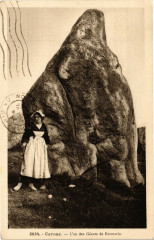
Quatre-vingt-deux menhirs alignés à Carnac
Chargement de la carte...
Précision de la localisation : 6 - A priori satisfaisante >> Votre avis :

Crédit photo : Vanbasten 23 - Sous licence Creative Commons
Street View Modifier la localisation
 Monument Historique
Adresse renseignée dans la base Mérimée :
56340 Carnac - France
Code Insee de la commune : 56034
Morbihan [56] - Vannes - Bretagne
Adresse approximative issue des coordonnées GPS (latitude et longitude) :
5211 Kerloquet 56340 Carnac
Eléments protégés :
Quatre-vingt-deux menhirs alignés (cad. M 120) : classement par arrêté du 12 octobre 1939
Périodes de construction :
Néolithique
Propriété de la commune
Informations pratiques de visite ou services :
Ouvert ou fermé à la visite, location de salle, chambres d'hôtes ?
Autres photographies :

Quatre-vingt-deux menhirs alignés à Carnac
English: Locmariaquer, France. Alignement de Kerlescan.

Quatre-vingt-deux menhirs alignés à Carnac
English: Locmariaquer, France. Alignement de Kerlescan.

Quatre-vingt-deux menhirs alignés à Carnac
English: Locmariaquer, France. Alignement de Kerlescan.

Quatre-vingt-deux menhirs alignés à Carnac
English: Locmariaquer, France. Alignement de Kerlescan : cromlech sud.

Quatre-vingt-deux menhirs alignés à Carnac
English: Locmariaquer, France. Alignement de Kerlescan.

Quatre-vingt-deux menhirs alignés à Carnac
Français : Menhirs de l'alignement de mégalithes de Kerlescan, à Carnac (Morbihan, Bretagne, France)

Quatre-vingt-deux menhirs alignés à Carnac
Français : Menhirs de l'alignement de mégalithes de Kerlescan, à Carnac (Morbihan, Bretagne, France)

Quatre-vingt-deux menhirs alignés à Carnac
Français : Menhirs de l'alignement de mégalithes de Kerlescan, à Carnac (Morbihan, Bretagne, France)

Quatre-vingt-deux menhirs alignés à Carnac
Français : Alignement de Kerlescan

Quatre-vingt-deux menhirs alignés à Carnac
Sheep grazing in the fenced off Kerlescan alignment near Carnac Taken by me

Quatre-vingt-deux menhirs alignés à Carnac
English: Kerlescan alignments, Carnac, France
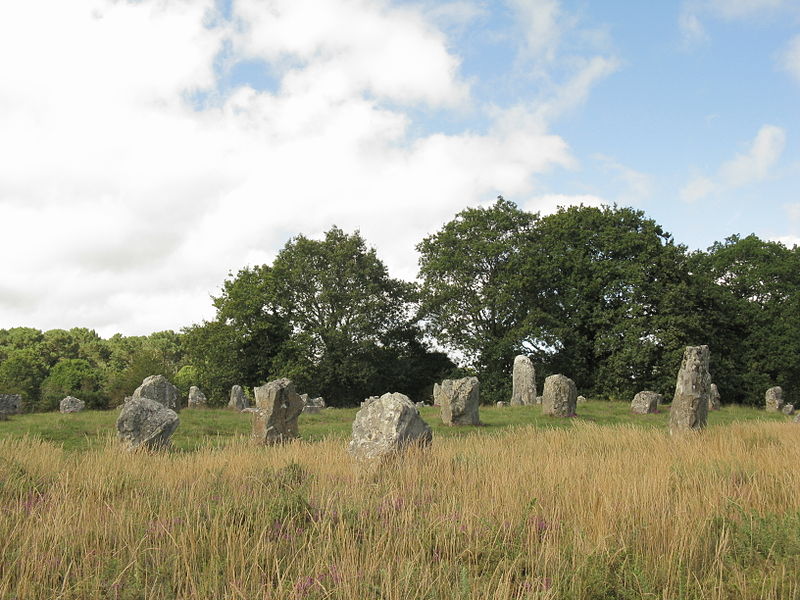
Quatre-vingt-deux menhirs alignés à Carnac
Nederlands: Megalieten van Kermario, Carnac

Quatre-vingt-deux menhirs alignés à Carnac
Nederlands: Megalieten van Kermario, Carnac
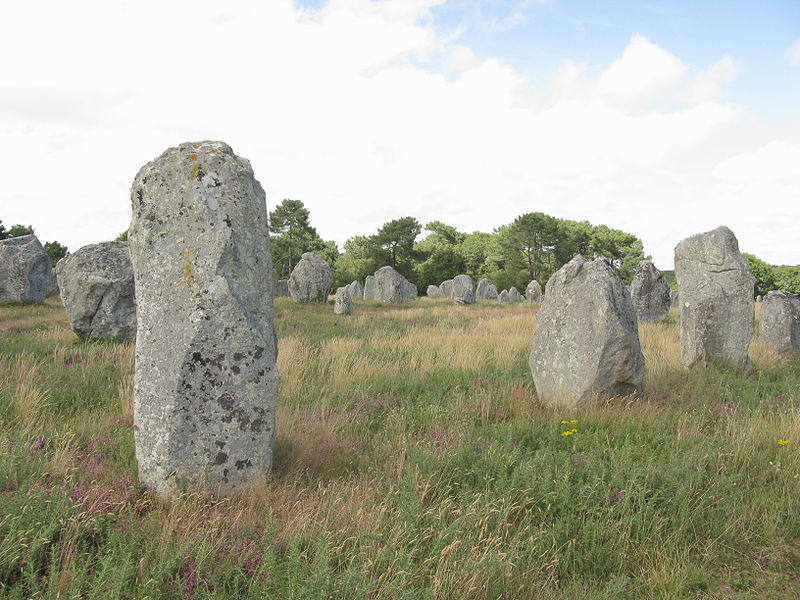
Quatre-vingt-deux menhirs alignés à Carnac
Nederlands: Megalieten van Kermario, Carnac

Quatre-vingt-deux menhirs alignés à Carnac
Nederlands: Megalieten van Kermario, Carnac

Quatre-vingt-deux menhirs alignés à Carnac
Nederlands: Identificatie Titel(s): Menhirs (megalieten) van Carnac Objecttype: foto Objectnummer: RP-F-F01163-MT Omschrijving: Onderdeel van Fotoalbum van een Franse amateurfotograaf met opnames van uitstapjes in Frankrijk, Spanje, België, Luxemburg en Nederland, de eerste automobielen en autoraces. Vervaardiging Vervaardiger: fotograaf: Delizy (toegeschreven aan) Plaats vervaardiging: Carnac Datering: 1901 Fysieke kenmerken: daglichtgelatinezilverdruk Materiaal: papier fotopapier Techniek: daglichtgelatinezilverdruk Afmetingen: foto: h 70 mm × b 83 mm Onderwerp Wat: landscape with menhir Waar: Carnac Verwerving en rechten Verwerving: overdracht van beheer 1994 Copyright: Publiek domein

Quatre-vingt-deux menhirs alignés à Carnac
English: Standing stones of Carnac: Alignement de Kerlescan, Carnac, Brittany

Quatre-vingt-deux menhirs alignés à Carnac
Français : Alignement et dolmen de Kerlescan

Quatre-vingt-deux menhirs alignés à Carnac
Français : Alignement et dolmen de Kerlescan

Quatre-vingt-deux menhirs alignés à Carnac
Français : Alignement et dolmen de Kerlescan

Quatre-vingt-deux menhirs alignés à Carnac
English: Alignment of Carnac

Quatre-vingt-deux menhirs alignés à Carnac
Deutsch: Alignements de Kerlescan, Carnac, France

Quatre-vingt-deux menhirs alignés à Carnac
Deutsch: Alignements de Kerlescan, Carnac, France

Quatre-vingt-deux menhirs alignés à Carnac
Deutsch: Alignements de Kerlescan, Carnac, France

Quatre-vingt-deux menhirs alignés à Carnac
Euskara: Karnag (Carnac bretoieraz)

Quatre-vingt-deux menhirs alignés à Carnac
standing stones
![Quatre-vingt-deux menhirs alignés - From Wikipedia, the free encyclopedia
The Carnac stones (Breton: Steudadoù Karnag) are an exceptionally dense collection of megalithic sites around the village of Carnac in Brittany, consisting of alignments, dolmens, tumuli and single menhirs. More than 3,000 prehistoric standing stones were hewn from local rock and erected by the pre-Celtic people of Brittany, and form the largest such collection in the world.[1] Most of the stones are within the Breton village of Carnac, but some to the east are within La Trinité-sur-Mer. The stones were erected at some stage during the Neolithic period, probably around 3300 BCE, but some may date to as early as 4500 BCE.[2]
Although the stones date from 4500 BCE, modern myths were formed which resulted from 1st century AD Roman and later Christian occupations, such as Saint Cornelius a Christian myth associated with the stones held that they were pagan soldiers in pursuit of Pope Cornelius when he turned them to stone.[3][4][5] Brittany has its own local versions of the Arthurian cycle. Local tradition claims that the reason they stand in such perfectly straight lines is that they are a Roman legion turned to stone by Merlin. In recent centuries, many of the sites have been neglected, with reports of dolmens being used as sheep shelters, chicken sheds or even ovens.[6] Even more commonly, stones have been removed to make way for roads, or as building materials. The continuing management of the sites remains a controversial topic](https://p.monumentum.fr/galerie/maxi/00571/571498-from-wikipedia-the-free-encyclopedia-the-carnac-stones-breton-steudadou-karnag-are-an-exceptionally-dense-collection-of-megalithic-sites-around-the-village-of-carnac-in-brittany-consisting-of-alignmen.jpg)
Quatre-vingt-deux menhirs alignés à Carnac
From Wikipedia, the free encyclopedia The Carnac stones (Breton: Steudadoù Karnag) are an exceptionally dense collection of megalithic sites around the village of Carnac in Brittany, consisting of alignments, dolmens, tumuli and single menhirs. More than 3,000 prehistoric standing stones were hewn from local rock and erected by the pre-Celtic people of Brittany, and form the largest such collection in the world.[1] Most of the stones are within the Breton village of Carnac, but some to the east are within La Trinité-sur-Mer. The stones were erected at some stage during the Neolithic period, probably around 3300 BCE, but some may date to as early as 4500 BCE.[2] Although the stones date from 4500 BCE, modern myths were formed which resulted from 1st century AD Roman and later Christian occupations, such as Saint Cornelius a Christian myth associated with the stones held that they were pagan soldiers in pursuit of Pope Cornelius when he turned them to stone.[3][4][5] Brittany has its own local versions of the Arthurian cycle. Local tradition claims that the reason they stand in such perfectly straight lines is that they are a Roman legion turned to stone by Merlin. In recent centuries, many of the sites have been neglected, with reports of dolmens being used as sheep shelters, chicken sheds or even ovens.[6] Even more commonly, stones have been removed to make way for roads, or as building materials. The continuing management of the sites remains a controversial topic
![Quatre-vingt-deux menhirs alignés - From Wikipedia, the free encyclopedia
The Carnac stones (Breton: Steudadoù Karnag) are an exceptionally dense collection of megalithic sites around the village of Carnac in Brittany, consisting of alignments, dolmens, tumuli and single menhirs. More than 3,000 prehistoric standing stones were hewn from local rock and erected by the pre-Celtic people of Brittany, and form the largest such collection in the world.[1] Most of the stones are within the Breton village of Carnac, but some to the east are within La Trinité-sur-Mer. The stones were erected at some stage during the Neolithic period, probably around 3300 BCE, but some may date to as early as 4500 BCE.[2]
Although the stones date from 4500 BCE, modern myths were formed which resulted from 1st century AD Roman and later Christian occupations, such as Saint Cornelius a Christian myth associated with the stones held that they were pagan soldiers in pursuit of Pope Cornelius when he turned them to stone.[3][4][5] Brittany has its own local versions of the Arthurian cycle. Local tradition claims that the reason they stand in such perfectly straight lines is that they are a Roman legion turned to stone by Merlin. In recent centuries, many of the sites have been neglected, with reports of dolmens being used as sheep shelters, chicken sheds or even ovens.[6] Even more commonly, stones have been removed to make way for roads, or as building materials. The continuing management of the sites remains a controversial topic](https://p.monumentum.fr/galerie/maxi/00571/571499-from-wikipedia-the-free-encyclopedia-the-carnac-stones-breton-steudadou-karnag-are-an-exceptionally-dense-collection-of-megalithic-sites-around-the-village-of-carnac-in-brittany-consisting-of-alignmen.jpg)
Quatre-vingt-deux menhirs alignés à Carnac
From Wikipedia, the free encyclopedia The Carnac stones (Breton: Steudadoù Karnag) are an exceptionally dense collection of megalithic sites around the village of Carnac in Brittany, consisting of alignments, dolmens, tumuli and single menhirs. More than 3,000 prehistoric standing stones were hewn from local rock and erected by the pre-Celtic people of Brittany, and form the largest such collection in the world.[1] Most of the stones are within the Breton village of Carnac, but some to the east are within La Trinité-sur-Mer. The stones were erected at some stage during the Neolithic period, probably around 3300 BCE, but some may date to as early as 4500 BCE.[2] Although the stones date from 4500 BCE, modern myths were formed which resulted from 1st century AD Roman and later Christian occupations, such as Saint Cornelius a Christian myth associated with the stones held that they were pagan soldiers in pursuit of Pope Cornelius when he turned them to stone.[3][4][5] Brittany has its own local versions of the Arthurian cycle. Local tradition claims that the reason they stand in such perfectly straight lines is that they are a Roman legion turned to stone by Merlin. In recent centuries, many of the sites have been neglected, with reports of dolmens being used as sheep shelters, chicken sheds or even ovens.[6] Even more commonly, stones have been removed to make way for roads, or as building materials. The continuing management of the sites remains a controversial topic
![Quatre-vingt-deux menhirs alignés - From Wikipedia, the free encyclopedia
The Carnac stones (Breton: Steudadoù Karnag) are an exceptionally dense collection of megalithic sites around the village of Carnac in Brittany, consisting of alignments, dolmens, tumuli and single menhirs. More than 3,000 prehistoric standing stones were hewn from local rock and erected by the pre-Celtic people of Brittany, and form the largest such collection in the world.[1] Most of the stones are within the Breton village of Carnac, but some to the east are within La Trinité-sur-Mer. The stones were erected at some stage during the Neolithic period, probably around 3300 BCE, but some may date to as early as 4500 BCE.[2]
Although the stones date from 4500 BCE, modern myths were formed which resulted from 1st century AD Roman and later Christian occupations, such as Saint Cornelius a Christian myth associated with the stones held that they were pagan soldiers in pursuit of Pope Cornelius when he turned them to stone.[3][4][5] Brittany has its own local versions of the Arthurian cycle. Local tradition claims that the reason they stand in such perfectly straight lines is that they are a Roman legion turned to stone by Merlin. In recent centuries, many of the sites have been neglected, with reports of dolmens being used as sheep shelters, chicken sheds or even ovens.[6] Even more commonly, stones have been removed to make way for roads, or as building materials. The continuing management of the sites remains a controversial topic](https://p.monumentum.fr/galerie/maxi/00571/571500-from-wikipedia-the-free-encyclopedia-the-carnac-stones-breton-steudadou-karnag-are-an-exceptionally-dense-collection-of-megalithic-sites-around-the-village-of-carnac-in-brittany-consisting-of-alignmen.jpg)
Quatre-vingt-deux menhirs alignés à Carnac
From Wikipedia, the free encyclopedia The Carnac stones (Breton: Steudadoù Karnag) are an exceptionally dense collection of megalithic sites around the village of Carnac in Brittany, consisting of alignments, dolmens, tumuli and single menhirs. More than 3,000 prehistoric standing stones were hewn from local rock and erected by the pre-Celtic people of Brittany, and form the largest such collection in the world.[1] Most of the stones are within the Breton village of Carnac, but some to the east are within La Trinité-sur-Mer. The stones were erected at some stage during the Neolithic period, probably around 3300 BCE, but some may date to as early as 4500 BCE.[2] Although the stones date from 4500 BCE, modern myths were formed which resulted from 1st century AD Roman and later Christian occupations, such as Saint Cornelius a Christian myth associated with the stones held that they were pagan soldiers in pursuit of Pope Cornelius when he turned them to stone.[3][4][5] Brittany has its own local versions of the Arthurian cycle. Local tradition claims that the reason they stand in such perfectly straight lines is that they are a Roman legion turned to stone by Merlin. In recent centuries, many of the sites have been neglected, with reports of dolmens being used as sheep shelters, chicken sheds or even ovens.[6] Even more commonly, stones have been removed to make way for roads, or as building materials. The continuing management of the sites remains a controversial topic

Quatre-vingt-deux menhirs alignés à Carnac
French painter and photographer

Quatre-vingt-deux menhirs alignés à Carnac

Quatre-vingt-deux menhirs alignés à Carnac
French architectural photographer

Quatre-vingt-deux menhirs alignés à Carnac
French architectural photographer

Quatre-vingt-deux menhirs alignés à Carnac
French architectural photographer

Quatre-vingt-deux menhirs alignés à Carnac
French architectural photographer

Quatre-vingt-deux menhirs alignés à Carnac
French architectural photographer

Quatre-vingt-deux menhirs alignés à Carnac
French architectural photographer

Quatre-vingt-deux menhirs alignés à Carnac
French architectural photographer

Quatre-vingt-deux menhirs alignés à Carnac
French architectural photographer

Quatre-vingt-deux menhirs alignés à Carnac
French architectural photographer

Quatre-vingt-deux menhirs alignés à Carnac
French architectural photographer

Quatre-vingt-deux menhirs alignés à Carnac
French architectural photographer

Quatre-vingt-deux menhirs alignés à Carnac
French architectural photographer

Quatre-vingt-deux menhirs alignés à Carnac
French architectural photographer

Quatre-vingt-deux menhirs alignés à Carnac
French architectural photographer

Quatre-vingt-deux menhirs alignés à Carnac
French architectural photographer

Quatre-vingt-deux menhirs alignés à Carnac

Quatre-vingt-deux menhirs alignés à Carnac

Quatre-vingt-deux menhirs alignés à Carnac
Français : Lieu : Carnac Lieu : Carnac, Morbihan, Bretagne, France Mission : 1920 - Bretagne - Georges Chevalier - (29 mai 1920-15 juin ) Thème : Habitat / Architecture Thème : Religion Thème : Nature / Environnement Sous-thème : Pin Sous-thème : Vestige archéologique Sous-thème : Pratique religieuse Sous-thème : Lande Sous-thème : Préhistoire Sous-thème : Végétation / botanique Sous-thème : Architecture religieuse Légende d'origine : France, Carnac, La lande et les Menhirs de Klescan Procédé : Autochrome Support : Verre Dénomination : Autochrome Format d'origine : Horizontal Appartenance actuelle : Département des Hauts-de-Seine, musée Albert-Kahn
Fiche Mérimée : PA00091126
Dernière mise à jour de la fiche Monumentum : 2026-10-10
Consultez le programme des Journées du Patrimoine pour le Monument Historique Quatre-vingt-deux menhirs alignés situé à Carnac en consultant le programme officiel des JEP 2026.
A proximité :
Carnac - Alignement et dolmen de Kerlescan
Carnac - Alignement et dolmen de Kermario
Carnac - Deux lechs
Carnac - Dolmen dit Er-Roh
Carnac - Restes de cromlech
Carnac - Restes de cromlech
La Trinité-sur-Mer - Tertre artificiel recouvrant des chambres reliées par des galeries
Carnac - Tertre tumulaire et menhir debout
Carnac - Tumulus dit du Manio, quadrilatère et menhir de Manio
Carnac - Tumulus-dolmen de Kercado
Cartes postales anciennes à proximité :