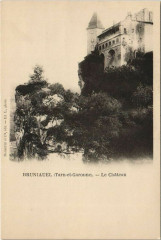
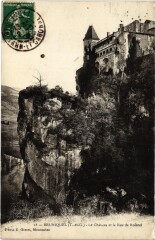
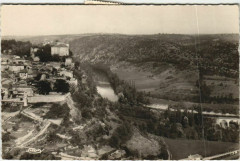
Site archéologique des quatre abris sous roche du château de Bruniquel à Bruniquel
Chargement de la carte...
Précision de la localisation : 6 - A priori satisfaisante >> Votre avis :

Crédit photo : Didier Descouens - Sous licence Creative Commons
Street View Modifier la localisation
 Monument Historique
Adresse renseignée dans la base Mérimée :
82800 Bruniquel - France
Code Insee de la commune : 82026
Tarn et Garonne [82] - Montauban - Midi Pyrénées (Occitanie)
Adresse approximative issue des coordonnées GPS (latitude et longitude) :
616 Chemin des Istournels 82800 Bruniquel
Eléments protégés :
Abri Montastruc (cad. G 406) ; abri Gandil (cad. G 407) ; abri Lafaye (cad. G 409) ; abri Plantade (cad. G 410) : inscription par arrêté du 20 mars 1996
Périodes de construction :
Paléolithique
Propriété privée ; propriété de la commune
Informations pratiques de visite ou services :
Ouvert ou fermé à la visite, location de salle, chambres d'hôtes ?
Autres photographies :

Site archéologique des quatre abris sous roche du château de Bruniquel à Bruniquel
English: Lithic industry in flint – Both sides of 4 specimens Satge: MagdalenianLocality: Archaeological Site of the four rock shelters, Bruniquel's castle. Bruniquel, Tarn-et-Garonne – France.Excavation: Excavation and collection: Victor Brun 1867

Site archéologique des quatre abris sous roche du château de Bruniquel à Bruniquel
English: Harpoon reindeer bones – Some views of the same object Satge: Magdalenian Locality: Archaeological Site of the four rock shelters, Bruniquel's castle. Bruniquel, Tarn-et-Garonne – France.Excavation: Excavation and collection: Victor Brun 1867

Site archéologique des quatre abris sous roche du château de Bruniquel à Bruniquel
English: BM Ice Age Art event, October 2011. Found at Montastruc. Palart.660 Description:Artefact; stone fragment of a waterworn pebble broken on one edge and across the reverse surface. Obverse is engraved with a bison facing right, complete except for the feet which have been omitted. The hump and beard are indicated with lines of hachuring, the back is shaded, a single arrow is drawn on the flank and the head is attached full face to a body in profile. The naivety of head (and figure) is accentuated by two round eyes. Dimensions: Length: 13 centimetres, Width: 7.5 centimetres, Thickness: 3.8 centimetres

Site archéologique des quatre abris sous roche du château de Bruniquel à Bruniquel
English: Rock carving from the British Museum's collection at Franks House. Part of the GLAM project to Franks House in 2011.

Site archéologique des quatre abris sous roche du château de Bruniquel à Bruniquel
Mommoth Spear thrower Late Magdalenian, about 12,500 years old - found with Swimming Reindeer sculpture From the rockshelter of Montastruc, Tarn-et-Garonne, France

Site archéologique des quatre abris sous roche du château de Bruniquel à Bruniquel
English: BM Ice Age Art event, October 2011. Found at Montastruc. Palart.660 Description:Artefact; stone fragment of a waterworn pebble broken on one edge and across the reverse surface. Obverse is engraved with a bison facing right, complete except for the feet which have been omitted. The hump and beard are indicated with lines of hachuring, the back is shaded, a single arrow is drawn on the flank and the head is attached full face to a body in profile. The naivety of head (and figure) is accentuated by two round eyes. Dimensions: Length: 13 centimetres, Width: 7.5 centimetres, Thickness: 3.8 centimetres

Site archéologique des quatre abris sous roche du château de Bruniquel à Bruniquel
English: Carved bones from the GLAM event at the British Museum's Ice Age exhibit.

Site archéologique des quatre abris sous roche du château de Bruniquel à Bruniquel
English: Carved bones from the GLAM event at the British Museum's Ice Age exhibit.

Site archéologique des quatre abris sous roche du château de Bruniquel à Bruniquel
female and male swimming reindeer - late Magdalenian period, approximately 12,500 years old found at Montastruc, Tarn et Garonne, France

Site archéologique des quatre abris sous roche du château de Bruniquel à Bruniquel
female and male swimming reindeer - late Magdalenian period, approximately 12,500 years old found at Montastruc, Tarn et Garonne, France

Site archéologique des quatre abris sous roche du château de Bruniquel à Bruniquel
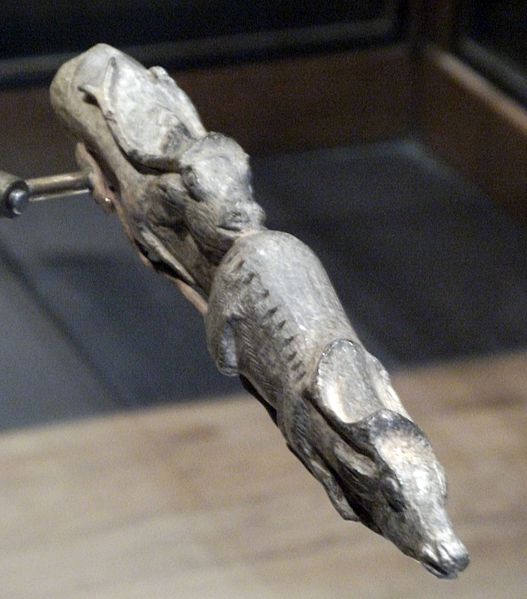
Swimming Reindeer Worth viewing large... Seen at The British Museum - This amazing sculpture is made from mammoth From the British Museum website: "This carving of swimming reindeer is one of the most beautiful pieces of Ice Age art ever discovered. It is a carved from the tip of a mammoth tusk and is around 13,000 years old. This places it at the end of the Last Ice Age, when animals such as mammoths, reindeer and wolverines roamed Europe. The sculpture depicts two reindeer that appear to be swimming and was found in the Montastruc Rockshelter, Bruniquel, Tarn-et-Garonne, central-southern France. When it was first exhibited in Paris in 1867, the intricate carving proved that humans lived alongside Ice Age animals and had imaginative minds, the same as modern humans. The sculpture is not a functional item for everyday use but a work of art made by people who lived as part of nature and depended on reindeer for their survival. As well as being a source of food, reindeer skins were used for clothing, blankets and tents and their bones and antlers were used for the manufacture of tools and weapons. The naturalism of the sculpture reveals that the artist had a hunter’s knowledge of the animals, as well as a keen aesthetic awareness. "

Site archéologique des quatre abris sous roche du château de Bruniquel à Bruniquel
English: Swimming reindeer
Site archéologique des quatre abris sous roche du château de Bruniquel à Bruniquel
English: Swimming reindeer

Site archéologique des quatre abris sous roche du château de Bruniquel à Bruniquel
Swimming Reindeer, the oldest carving in the British Museum.

Site archéologique des quatre abris sous roche du château de Bruniquel à Bruniquel
Français : Baguette sculptée en bois de renne, figurant un cheval bondissant. Abri de Montastruc, Bruniquel (Tarn-et-Garonne), v. 17000-14000 ans AP cal. Musée d'archéologie nationale.

Site archéologique des quatre abris sous roche du château de Bruniquel à Bruniquel

Site archéologique des quatre abris sous roche du château de Bruniquel à Bruniquel

Site archéologique des quatre abris sous roche du château de Bruniquel à Bruniquel

Site archéologique des quatre abris sous roche du château de Bruniquel à Bruniquel

Site archéologique des quatre abris sous roche du château de Bruniquel à Bruniquel

Site archéologique des quatre abris sous roche du château de Bruniquel à Bruniquel

Site archéologique des quatre abris sous roche du château de Bruniquel à Bruniquel

Site archéologique des quatre abris sous roche du château de Bruniquel à Bruniquel

Site archéologique des quatre abris sous roche du château de Bruniquel à Bruniquel
The manufacture of Magdalenian bone needles. Showing the bone from which splinters have been taken, gravers, hone, toothed tool for rounding splinters, and finished needles. Wellcome Images Keywords: prehistory; Surgical Instruments; Archaeology

Site archéologique des quatre abris sous roche du château de Bruniquel à Bruniquel

Site archéologique des quatre abris sous roche du château de Bruniquel à Bruniquel

Site archéologique des quatre abris sous roche du château de Bruniquel à Bruniquel

Site archéologique des quatre abris sous roche du château de Bruniquel à Bruniquel
Fiche Mérimée : PA82000001
Dernière mise à jour de la fiche Monumentum : 2026-09-21
Consultez le programme des Journées du Patrimoine pour le Monument Historique Site archéologique des quatre abris sous roche du château de Bruniquel situé à Bruniquel en consultant le programme officiel des JEP 2026.
A proximité :
Bruniquel - Ancienne maison dite des Comtes de Fayrols
Bruniquel - Forges de Caussanus
Penne - Grotte de la Magdeleine
Bruniquel - Maison aux anneaux de fer
Bruniquel - Maison de bois Maison Belaygue
Bruniquel - Maison dite Le Parlement
Bruniquel - Ruines du château et fortifications avancées des châteaux
Bruniquel - Site archéologique de la grotte de Bruniquel
Bruniquel - Site archéologique de la grotte de Mayrière Supérieure
Bruniquel - Église Saint-Maffre
Cartes postales anciennes à proximité :